
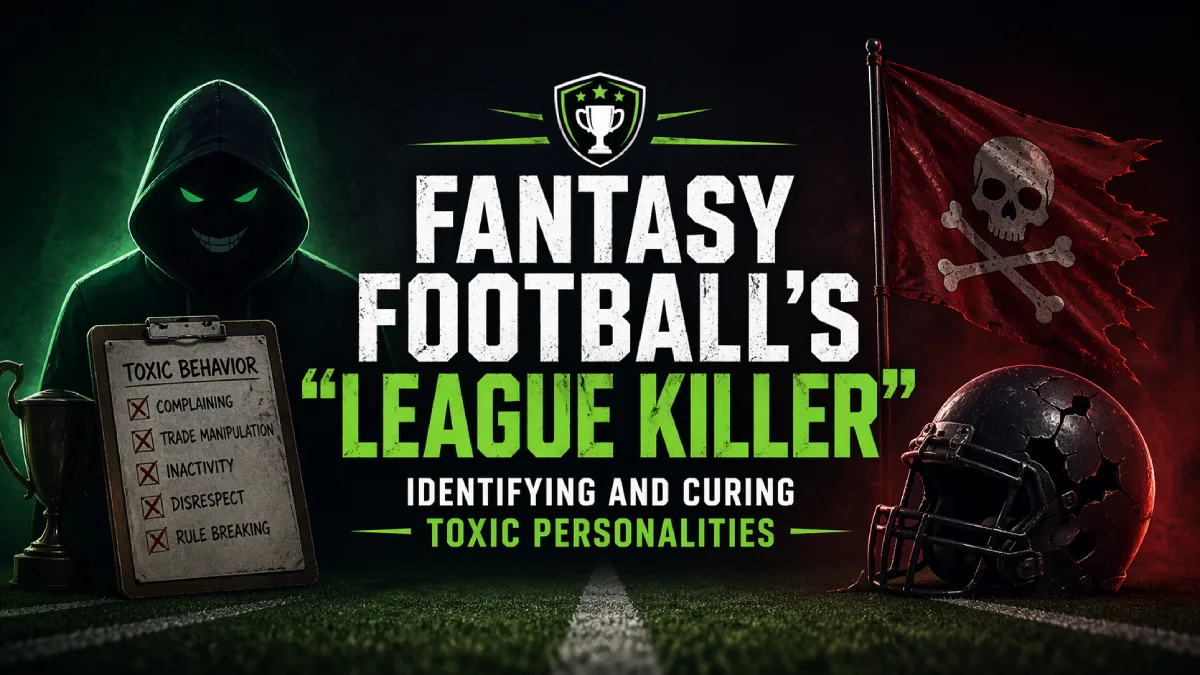
The Silent League Destroyer
Every fantasy football commissioner eventually runs into it—the one owner who slowly drains the life out of the league. It’s not always obvious at first. Maybe it starts with a few questionable trades, a couple of passive-aggressive comments, or constant complaints about rules.
Then suddenly, engagement drops. Group chats go quiet. Owners stop caring.
That’s the impact of fantasy football toxic owners—what we’ll call “The League Killer.”
What Is a “League Killer” in Fantasy Football?
A fantasy football toxic owner is any league member whose behavior negatively impacts engagement, fairness, or enjoyment for others.
In simple terms:
A League Killer is someone who makes your league less fun, less fair, or less active.
For commissioners, identifying and addressing these personalities early is critical to maintaining a healthy, competitive league.
Why Toxic Owners Kill Leagues
Fantasy football leagues don’t usually collapse because of bad scoring settings or draft formats—they collapse because of people.
Here’s what toxic behavior leads to:
- Reduced league engagement
- Trade distrust and veto drama
- Increased conflict in chats
- Owner turnover or abandonment
- Commissioner burnout
Unchecked, one toxic owner can undo years of league building.
5 Types of Fantasy Football Toxic Owners
1. The Chronic Complainer
Signature Move: Constantly arguing rules, scoring, or outcomes.
- Complains after every loss
- Blames luck, settings, or “league bias”
- Pushes for rule changes mid-season
Why they’re dangerous: They create negativity and undermine commissioner authority.
2. The Trade Manipulator
Signature Move: Exploits inexperienced owners or pushes unfair deals.
- Sends spammy, lopsided offers
- Pressures others into trades
- Sparks veto debates every week
Why they’re dangerous: They erode trust across the league.
3. The Ghost Owner
Signature Move: Stops setting lineups or engaging.
- Leaves injured players in starting slots
- Ignores waivers and trades
- Disappears mid-season
Why they’re dangerous: They compromise competitive balance.
4. The Group Chat Toxicity Engine
Signature Move: Turns league chat into a hostile environment.
- Personal attacks or excessive trash talk
- Passive-aggressive comments
- Escalates minor disagreements
Why they’re dangerous: They drive quieter owners away.
5. The Rule Breaker
Signature Move: Pushes or ignores league boundaries.
- Collusion or tanking
- Circumventing waivers or deadlines
- Exploiting loopholes
Why they’re dangerous: They threaten league integrity.
How to Identify Toxic Behavior Early
Spotting fantasy football toxic owners early can save your league.
Look for patterns—not one-off incidents:
- Repeated complaints after losses
- Consistent trade drama
- Declining responsiveness or engagement
- Negative tone in league communication
- Other owners privately raising concerns
Commissioner tip: If multiple owners mention the same issue, it’s real.
How to Fix the Problem (Without Blowing Up the League)
Step 1: Address It Privately First
Start with a direct, respectful conversation.
- Be specific about behavior
- Focus on league impact—not personal attacks
- Set clear expectations moving forward
Example:
“Hey, I’ve noticed some frustration around trades and chat tone. I want to keep the league fun for everyone, so let’s dial that back.”
Step 2: Reinforce League Rules Publicly
If behavior continues:
- Reiterate rules in the group chat
- Clarify gray areas (trades, tanking, conduct)
- Keep messaging neutral and non-targeted
This sets expectations without escalating conflict.
Step 3: Implement Structural Fixes
If patterns persist, adjust the system:
- Trade review policies (commissioner or committee)
- Lineup lock penalties or replacement rules
- Clear code of conduct
- Engagement incentives
Good structure prevents repeat issues.
Step 4: Use Warnings (When Necessary)
If a fantasy football toxic owner continues:
- Issue a formal warning
- Document behavior
- Be transparent about consequences
Consistency is key—don’t play favorites.
Step 5: Remove the League Killer
Sometimes, the fix is simple—but not easy.
If an owner:
- Repeatedly disrupts the league
- Ignores warnings
- Damages overall experience
You remove them.
A healthy league > one problematic owner.
How to Prevent Toxic Owners Long-Term
Build a Strong League Culture
- Set expectations before the season
- Encourage competitive but respectful play
- Reward engagement (weekly prizes, shoutouts)
Create a Clear Constitution
Include:
- Trade rules
- Tanking policies
- Activity requirements
- Code of conduct
Clarity prevents conflict.
Vet New Owners Carefully
When replacing members:
- Choose active, engaged players
- Avoid “random fill-ins”
- Prioritize personality fit over skill level
Commissioner Mindset: Protect the League
Your job isn’t just to run the league—it’s to protect it.
That means:
- Acting early, not reactively
- Being fair, but firm
- Prioritizing the group over individuals
A great commissioner doesn’t avoid conflict—they manage it.
Final Takeaway
Every commissioner will encounter fantasy football toxic owners at some point. The difference between thriving leagues and dying ones comes down to how you handle them.
Identify early. Address directly. Fix structurally. Remove if necessary.
Because in fantasy football, one “League Killer” can ruin everything—but a strong commissioner can stop it.
FAQ: Identifying and Dealing with Toxic Owners
A toxic owner is someone whose behavior negatively impacts league fairness, engagement, or enjoyment—such as constant complaining, trade manipulation, or inactivity.
Start with a private conversation, reinforce rules, implement structural fixes, and escalate to warnings or removal if needed.
If they repeatedly disrupt the league, ignore warnings, or damage the experience for others, removal is justified.
Set clear rules, build a strong league culture, and carefully select committed, respectful owners.