
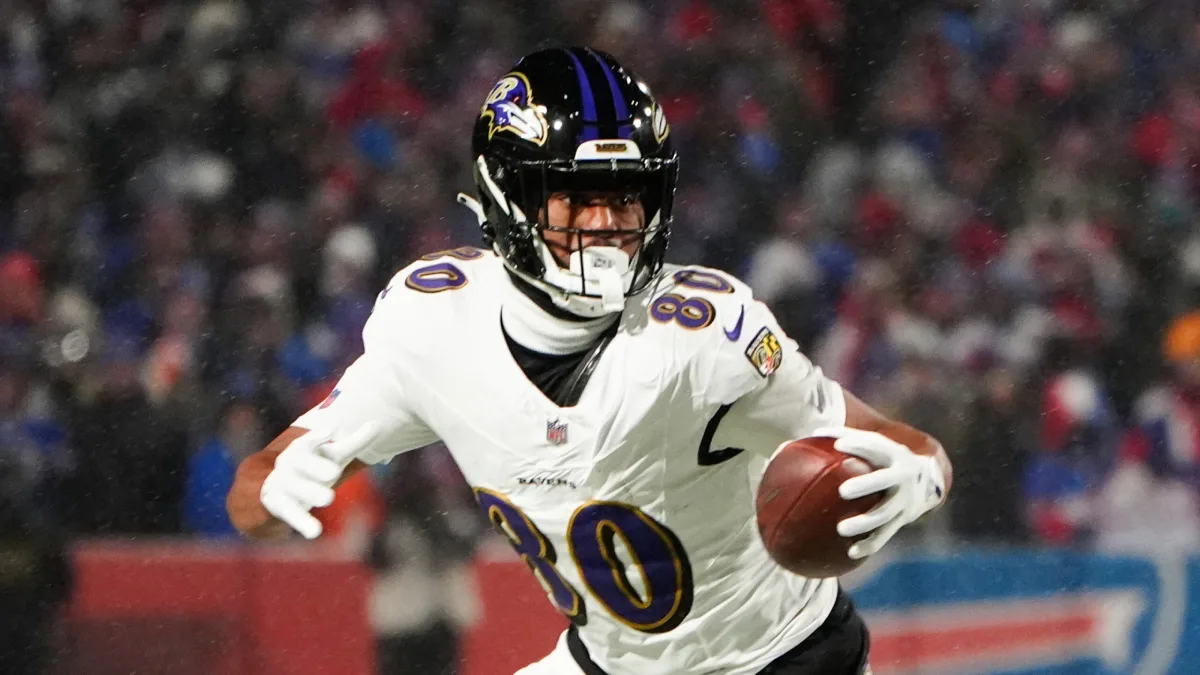
Why Should Fantasy Owners Wait on Tight End in 2026?
Finding 2026 tight end sleepers is one of the easiest ways to gain value in fantasy football drafts. While elite tight ends can provide a weekly advantage, the middle tier often finishes with similar production despite dramatically different draft costs. That creates an opportunity for fantasy owners willing to wait until the later rounds.
Several talented tight ends enter the 2026 season with affordable ADPs despite possessing legitimate top-10 upside. Whether they’re stepping into larger roles, benefiting from improved quarterback play, or simply being overlooked by the fantasy community, these late-round options deserve serious consideration.
If you prefer building depth at running back and wide receiver early, these are the tight ends worth targeting once the draft reaches the later rounds.
Best Late-Round Tight End Sleepers for 2026
Dalton Kincaid (Bills)
Why He’s a Sleeper
- Still possesses one of the highest receiving ceilings among young tight ends.
- Attached to one of the NFL’s most productive passing offenses.
- Excellent route runner capable of creating mismatches against linebackers.
- Could see increased red-zone usage if Buffalo emphasizes shorter passing concepts.
- Offers legitimate TE1 upside despite a modest draft cost.
Fantasy Recommendation: Draft confidently as a high-upside late starter who could finish well above his ADP.
Isaiah Likely (Giants)
Why He’s a Sleeper
- Finally has an opportunity to be the featured tight end after spending much of his career behind Mark Andrews in Baltimore.
- Has consistently flashed playmaking ability whenever given starter-level snaps.
- Athletic pass catcher capable of stretching the seam and creating yards after the catch.
- The Giants signed him with the expectation that he’ll play a significant role in the passing game.
- A full-time workload could unlock the breakout fantasy season many have been waiting for.
Fantasy Recommendation: Likely is one of the most intriguing late-round upside picks at tight end, with a clear path to becoming an every-week fantasy starter if he capitalizes on his expanded role.
Mark Andrews (Ravens)
Why He’s a Sleeper
- Draft cost has fallen significantly after recent inconsistency.
- Remains one of the league’s most accomplished red-zone weapons.
- Strong chemistry with Baltimore’s offense still exists.
- Touchdown upside alone can swing weekly matchups.
- Veteran experience provides a relatively safe weekly floor.
Fantasy Recommendation: If he continues falling in drafts, Andrews becomes an excellent value pick capable of returning top-five production.
Chig Okonkwo (Commanders)
Why He’s a Sleeper
- Dynamic athlete who excels with the ball in his hands.
- Change of scenery could unlock additional opportunities.
- Creates mismatches against slower defenders.
- Has flashed big-play ability throughout his career.
- Low-risk investment with intriguing breakout potential.
Fantasy Recommendation: Worth stashing late as a breakout candidate who could become an every-week starter.
Brenton Strange (Jaguars)
Why He’s a Sleeper
- Opportunity for increased targets if his offensive role expands.
- Reliable hands and improving route tree.
- Young player still developing into a larger workload.
- Athletic profile suggests more upside than current perception.
- Could become a security blanket in Jacksonville’s passing attack.
Fantasy Recommendation: An ideal final-round dart throw with room to significantly outperform expectations.
Hunter Henry (Patriots)
Why He’s a Sleeper
- Continues to produce whenever healthy.
- Trusted target near the goal line.
- Veteran route runner who consistently finds soft spots in coverage.
- Reliable weekly usage creates a stable fantasy floor.
- Often overlooked because of limited hype.
Fantasy Recommendation: A dependable late-round option for fantasy owners prioritizing consistency over volatility.
David Njoku (Chargers)
Why He’s a Sleeper
- Elite athleticism remains one of his biggest strengths.
- Change of offense could create new opportunities.
- Dangerous after the catch and difficult to tackle.
- Can generate chunk plays that separate him from lower-end tight ends.
- Possesses legitimate top-eight upside if heavily targeted.
Fantasy Recommendation: Target Njoku late if you’re looking for a high-ceiling starter with breakout potential.
Why Late-Round Tight Ends Continue to Provide Value
Every season, fantasy owners find productive tight ends outside the early rounds. Because touchdown variance heavily influences fantasy scoring at the position, paying a premium isn’t always necessary.
By waiting on tight end, fantasy owners can invest early draft capital in scarce running backs and elite wide receivers before selecting a player with similar upside several rounds later. The strategy often creates stronger overall rosters while minimizing opportunity cost.
The key is identifying players whose roles can expand during the season rather than chasing last year’s fantasy finishes.
Final Thoughts on 2026 Tight End Sleepers
The 2026 tight end sleepers pool offers several intriguing options capable of dramatically outperforming their draft position. Whether you’re looking for a dependable veteran like Hunter Henry, a proven producer such as Mark Andrews at a discount, or breakout candidates including Dalton Kincaid, Isaiah Likely, Chig Okonkwo, Brenton Strange, and David Njoku, waiting on tight end remains a viable strategy.
Rather than reaching for the middle tier, load up on premium talent at other positions early and target one of these late-round sleepers. Even if only one breaks out, the value gained can provide a significant edge throughout the fantasy football season.
Tight End Sleepers: Frequently Asked Questions
Dalton Kincaid, Isaiah Likely, Mark Andrews, Chig Okonkwo, Brenton Strange, Hunter Henry, and David Njoku all offer the potential to outperform their draft position in 2026.
Yes. Unless you can draft an elite difference-maker at a reasonable value, waiting on tight end often allows fantasy owners to strengthen running back and wide receiver depth before selecting a quality sleeper.
Isaiah Likely and Dalton Kincaid arguably possess the highest ceilings because of their athletic ability and potential to earn larger receiving roles.
Absolutely. Pairing two upside sleepers allows fantasy owners to play favorable matchups early in the season while increasing the chances one develops into a weekly starter.
Look for talented players with expanding roles, strong athletic profiles, red-zone opportunities, improving quarterback situations, or changing offensive environments. Those factors often lead to fantasy breakouts at minimal draft cost.