
Which Tight Ends Are Losing Fantasy Football Value in 2026?
Tight end is one of the shallowest positions in fantasy football, making changes in player value even more important. Every season, injuries, age, declining production, and changing offensive roles cause some of the biggest names to slide down draft boards.
While a falling Average Draft Position (ADP) can be a warning sign, it can also create excellent draft-day value. The key is identifying whether the market is reacting appropriately—or overreacting. Below are the fantasy football tight ends whose stock has fallen entering the 2026 season and whether fantasy owners should still consider drafting them.
Why Fantasy Owners Should Monitor Falling Tight End ADP
Unlike wide receiver, there are only a handful of tight ends capable of making a significant weekly impact. Because of that, understanding why a player’s value is dropping can help fantasy owners gain an edge.
Before crossing a player off your draft board, ask yourself:
- Is age becoming a legitimate concern?
- Are injuries affecting long-term outlook?
- Has the offense changed?
- Is target competition increasing?
- Has the player’s role diminished?
Sometimes the market gets it right. Other times, talented veterans become bargains simply because fantasy owners have grown tired of drafting them.
Tight Ends Whose Stock Has Fallen
Travis Kelce (Chiefs)
Why his stock is down
- Father Time is beginning to catch up with one of fantasy football’s all-time great tight ends.
- Fantasy owners are no longer expecting the dominant weekly advantage Kelce once provided.
- His ceiling isn’t viewed as high as it was during his prime.
- More owners are prioritizing younger options earlier in drafts.
Fantasy Recommendation: Kelce can still be productive, but fantasy owners should value him as a solid starter rather than an elite positional advantage.
George Kittle (49ers)
Why his stock is down
- Entering another season as one of the older starting tight ends.
- Recovering from an injury has created durability concerns.
- Physical playing style has led to frequent bumps and bruises throughout his career.
- Fantasy owners worry about missed games more than ever.
Fantasy Recommendation: Kittle still offers elite weekly upside when healthy, but his injury risk makes him less attractive at his previous draft cost.
Dalton Kincaid (Bills)
Why his stock is down
- Has yet to develop into the fantasy star many expected.
- Buffalo added additional pass catchers, creating more target competition.
- Weekly consistency has been lacking.
- Fantasy owners are beginning to question his breakout potential.
Fantasy Recommendation: Kincaid remains a worthwhile upside pick, but expectations should be lowered until he proves he can become a featured option.
Dallas Goedert (Eagles)
Why his stock is down
- Age is beginning to factor into his fantasy outlook.
- Philadelphia invested in another tight end through the draft.
- Additional competition could reduce his long-term workload.
- His weekly target ceiling appears lower than in previous seasons.
Fantasy Recommendation: Goedert profiles as a dependable TE2 with occasional TE1 weeks rather than an every-week difference maker.
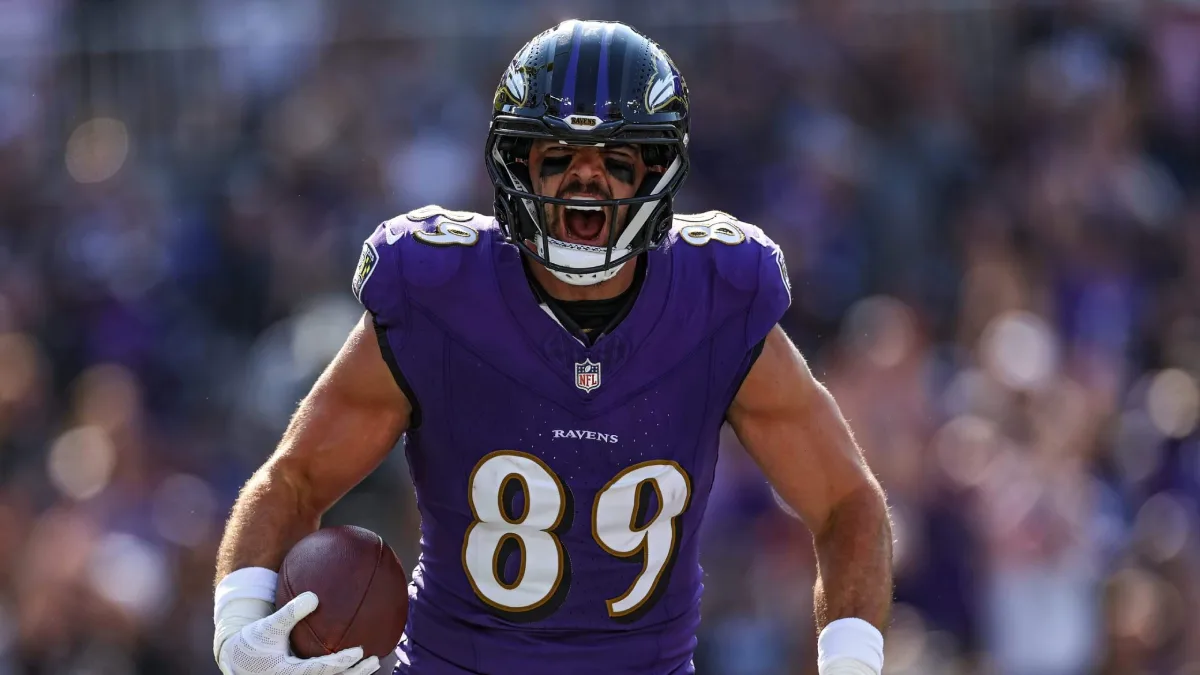
Mark Andrews (Ravens)
Why his stock is down
- No longer looks like the dominant fantasy tight end he once was.
- Finished in the TE2 range last season instead of among the elite.
- Target competition has increased within Baltimore’s offense.
- Fantasy owners are beginning to favor younger breakout candidates.
Fantasy Recommendation: Andrews remains draftable, but his price should reflect his new reality as a solid starter instead of an automatic top-tier option.
Dalton Schultz (Texans)
Why his stock is down
- Quietly produced one of the best fantasy seasons of his career.
- Despite the production, fantasy owners remain hesitant to invest.
- Lacks the excitement associated with younger breakout candidates.
- His ADP has not matched last year’s finish.
Fantasy Recommendation: Schultz is an undervalued veteran who can provide steady production at an affordable draft cost.
T.J. Hockenson (Vikings)
Why his stock is down
- Multiple injury-plagued seasons have raised durability concerns.
- Entering the later stages of his career.
- No longer appears to be the focal point of Minnesota’s passing attack.
- Fantasy owners question whether his best seasons are behind him.
Fantasy Recommendation: Hockenson still offers a reliable floor, but his overall upside is lower than it once was.
Pat Freiermuth (Steelers)
Why his stock is down
- Has always generated more optimism than elite fantasy production.
- Saw a significant decline in production from 2024 to 2025.
- Has struggled to establish consistent week-to-week value.
- Fantasy owners are beginning to move on to younger options.
Fantasy Recommendation: Freiermuth is best viewed as a streaming option unless Pittsburgh’s passing game takes a major step forward.
David Njoku (Chargers)
Why his stock is down
- Once viewed as a reliable fantasy TE1.
- Consecutive injury-shortened seasons have damaged his fantasy value.
- A move to a new team creates uncertainty about his role.
- Fantasy owners are questioning whether he can return to his previous level of production.
Fantasy Recommendation: Njoku is an intriguing bounce-back candidate later in drafts but carries more risk than reward as a primary starter.
Final Thoughts: Don’t Ignore Falling Tight Ends
Not all tight ends whose stock has fallen are headed for another disappointing season. Some are declining because of legitimate age or injury concerns, while others are simply victims of changing public perception.
Fantasy owners who understand the difference can uncover tremendous value later in drafts. If a talented player falls well below his expected range, the risk often becomes worth the potential reward.
Monitor preseason usage, injury updates, and offensive trends throughout training camp. Several of these tight ends could regain momentum before the regular season begins, creating buying opportunities for prepared fantasy owners.
Falling Tight End Value: Frequently Asked Questions
Dalton Kincaid and David Njoku have seen some of the largest declines after entering previous seasons with much higher expectations.
Yes. Veteran tight ends can still provide reliable fantasy production, but fantasy owners should adjust expectations as players age and durability becomes a bigger concern.
Not automatically. If an injury causes a player’s ADP to fall too far, the discount can outweigh the risk.
Absolutely. Some of the best draft values each season come from players whose market price drops more than their actual fantasy outlook.
David Njoku has the tools to return to TE1 territory if he stays healthy and quickly establishes himself in his new offense.