
The Toughest RB Draft Calls for Fantasy Owners
What are some of the hardest fantasy football running back decisions in 2026 drafts? The toughest calls come when two elite backs carry nearly identical ADPs, similar projections, and realistic RB1 upside. These debates often determine whether fantasy owners build a roster around volume, explosiveness, touchdown upside, or receiving production.
In today’s fantasy landscape, the margin between winning and losing your league often comes down to making the right choice between closely valued players. Understanding offensive environment, workload security, efficiency trends, and weekly ceiling outcomes can help fantasy owners break ties with confidence on draft day.
This guide examines several of the biggest fantasy football running back decisions facing fantasy owners in 2026 drafts.
Bijan Robinson (Falcons) or Jahmyr Gibbs (Lions)
The Case for Bijan Robinson
Bijan Robinson remains one of the safest bets in fantasy football because his workload profile is nearly impossible to replicate. Atlanta’s offense is specifically structured around maximizing his versatility as both a rusher and receiver, giving him one of the highest touch ceilings in the league.
For fantasy owners prioritizing stability, Robinson checks every box:
- Heavy rushing volume
- Goal-line opportunities
- Reliable receiving usage
- Minimal competition for touches
- Elite weekly floor
Robinson’s combination of volume and touchdown equity creates a profile that can realistically finish as the overall RB1.
The Case for Jahmyr Gibbs
Jahmyr Gibbs offers a different type of fantasy dominance. Instead of relying on overwhelming touch totals, Gibbs thrives through elite efficiency and explosive playmaking.
Detroit’s offensive line continues to create ideal rushing lanes, while Gibbs’ receiving role gives him massive value in PPR leagues. His ability to score from anywhere on the field allows him to produce league-winning weeks without requiring 25 carries.
Why fantasy owners love Gibbs:
- Elite explosiveness
- Premium receiving workload
- Big-play touchdown upside
- High-scoring offensive environment
- Strong efficiency metrics
Fantasy Football Running Back Decision: Fantasy owners seeking maximum weekly stability may lean toward Robinson’s workload security, while owners prioritizing explosiveness and PPR upside could prefer Gibbs.
Jonathan Taylor (Colts) or James Cook (Bills)
The Case for Jonathan Taylor
Jonathan Taylor still represents one of the purest workhorse profiles in fantasy football. Indianapolis continues to build its offensive identity around a physical rushing attack, and Taylor remains the centerpiece.
His blend of speed, vision, and touchdown upside makes him a weekly threat for massive rushing totals.
Taylor’s appeal includes:
- Elite rushing workload
- Consistent goal-line usage
- Breakaway run potential
- Stable weekly carry totals
- Proven RB1 production history
Fantasy owners looking for traditional bell-cow volume often gravitate toward Taylor because few backs can match his rushing ceiling.
The Case for James Cook
James Cook has quietly become one of fantasy football’s safest PPR assets. Buffalo’s offense consistently creates space for him as both a runner and receiver, allowing him to maintain strong production even in pass-heavy game scripts.
Cook’s receiving role dramatically raises his weekly floor.
Reasons fantasy owners target Cook:
- Strong reception totals
- High-efficiency offense
- Consistent weekly involvement
- Valuable open-field usage
- Reliable PPR production
Fantasy Football Running Back Decision: Taylor offers the safer path to dominant rushing production, while Cook provides more receiving-based stability in PPR formats.
De’Von Achane (Dolphins) or Kenneth Walker III (Chiefs)
The Case for De’Von Achane
De’Von Achane possesses arguably the most dangerous per-touch upside in fantasy football. Few players can generate explosive fantasy production with such limited volume.
Even with coaching changes in Miami, Achane’s elite speed profile remains the centerpiece of the offense’s spacing concepts.
Why fantasy owners chase Achane:
- Historic efficiency upside
- Massive home-run ability
- Receiving game explosiveness
- League-winning weekly ceiling
- Strong fit in zone concepts
Achane can swing fantasy matchups with a handful of touches.
The Case for Kenneth Walker III
Kenneth Walker III enters a dramatically improved fantasy environment in Kansas City. Pairing his tackle-breaking ability with an offense led by Patrick Mahomes creates enormous scoring upside.
Walker’s fit inside an explosive offense gives him access to lighter defensive fronts and more premium scoring opportunities.
Fantasy owners may prefer Walker because of:
- Elite offensive environment
- Increased touchdown potential
- Explosive rushing style
- Improved efficiency outlook
- Expanded career ceiling
Fantasy Football Running Back Decision: Achane offers unmatched efficiency and explosive upside, while Walker may carry the stronger touchdown environment and overall offensive support.
Saquon Barkley (Eagles) or Derrick Henry (Ravens)
The Case for Saquon Barkley
Saquon Barkley enters 2026 as one of fantasy football’s biggest rebound candidates. While his 2025 season disappointed fantasy owners, Philadelphia’s offensive struggles extended far beyond Barkley himself.
A healthier offensive line and improved offensive structure could quickly restore his RB1 value.
Why Barkley still intrigues fantasy owners:
- Proven elite ceiling
- Strong receiving involvement
- Major bounce-back potential
- High-value red zone role
- Explosive dual-threat ability
At his current ADP, Barkley offers significant upside if Philadelphia’s offense stabilizes.
The Case for Derrick Henry
Derrick Henry continues to dominate despite concerns about age-related decline. Baltimore’s offensive structure perfectly complements his downhill rushing style, especially alongside Lamar Jackson.
Henry remains one of the safest touchdown bets in fantasy football.
Fantasy owners value Henry for:
- Elite touchdown production
- Consistent rushing volume
- Strong weekly floor
- Favorable rushing environment
- Proven durability profile
Fantasy Football Running Back Decision: Barkley offers more bounce-back upside and receiving value, while Henry remains the safer bet for touchdown consistency and weekly rushing production.
Ashton Jeanty (Raiders) or Jeremiyah Love (Cardinals)
The Case for Ashton Jeanty
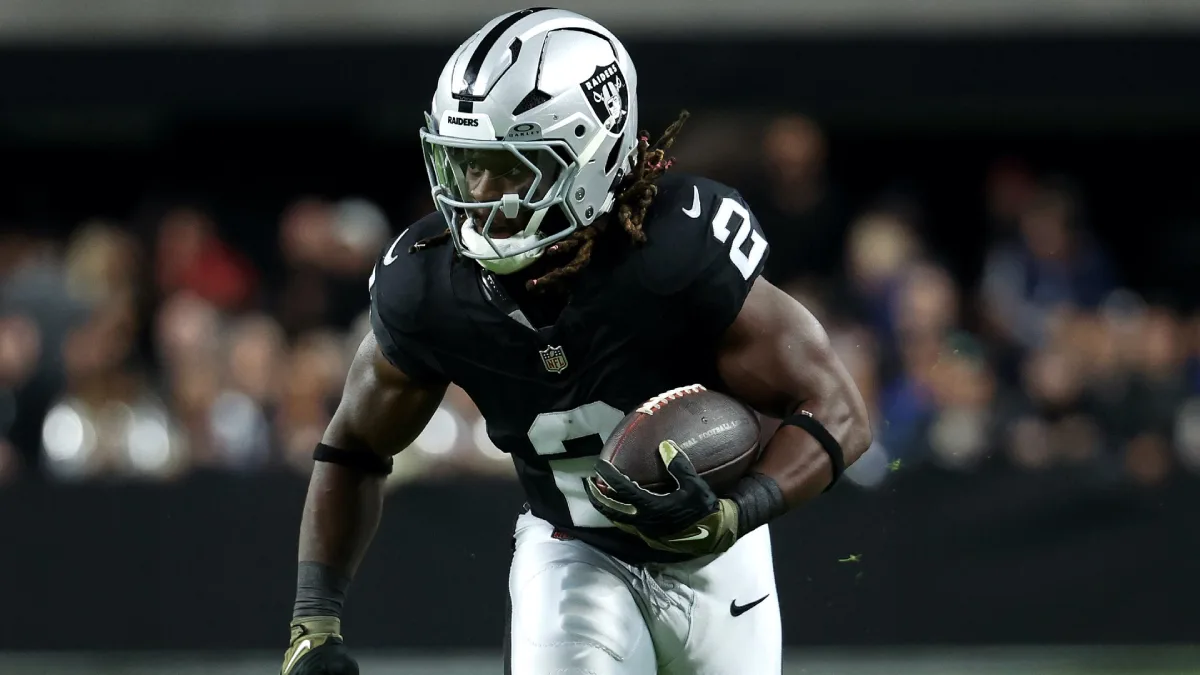
Ashton Jeanty enters 2026 with growing momentum after an impressive rookie season. Las Vegas appears committed to featuring him as a foundational offensive centerpiece under a more favorable coaching setup.
His projected workload could place him among fantasy football’s true volume monsters.
Why fantasy owners are excited about Jeanty:
- Workhorse usage projection
- Improved offensive line
- Heavy receiving potential
- Strong sophomore breakout path
- Massive touch ceiling
Jeanty’s expected volume creates one of the safest young RB profiles in drafts.
The Case for Jeremiyah Love
Jeremiyah Love arrives with elite draft capital and enormous long-term upside. Arizona invested heavily in him, signaling immediate offensive involvement from Day 1.
His combination of burst, contact balance, and collegiate production gives him elite fantasy potential immediately.
Reasons fantasy owners may prefer Love:
- Elite athletic upside
- Immediate feature-back potential
- Fresh workload entering the NFL
- Strong scheme fit
- Massive long-term ceiling
Fantasy Football Running Back Decision: Jeanty provides the safer projected workload entering Year 2, while Love carries the appeal of elite rookie upside and explosive long-term potential.
Final Thoughts on Fantasy Football Running Back Decisions
The hardest fantasy football running back decisions rarely involve choosing between a “good” player and a “bad” player. Instead, they involve deciding which type of upside best fits your roster construction and league format.
Some fantasy owners prefer stable workloads and touchdown consistency. Others chase explosive efficiency and receiving upside. Understanding those differences is critical when evaluating close RB tiers during fantasy football drafts.
When fantasy owners enter draft season with a clear understanding of player archetypes, offensive environments, and scoring formats, these difficult running back decisions become far easier to navigate.