
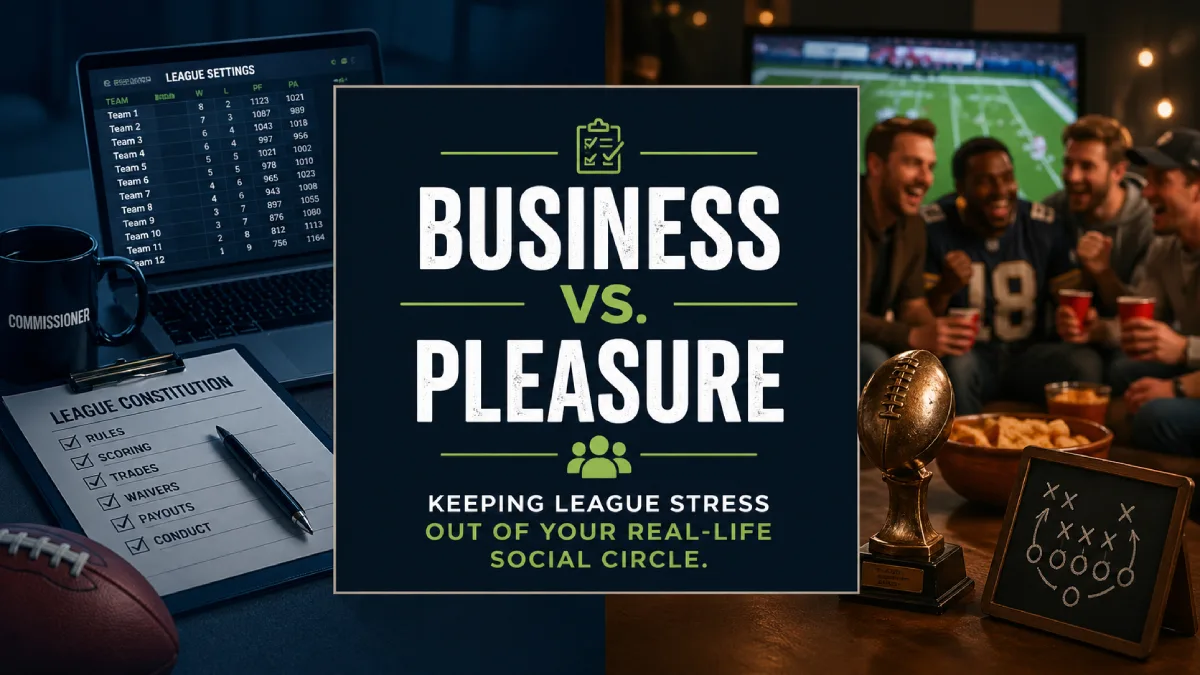
How do you keep fantasy football from damaging real-life relationships?
The key is fantasy football league conflict management—setting clear boundaries, enforcing fair rules, and separating league decisions from personal relationships. Commissioners who treat the league like a structured game—not a personal battleground—protect both the competition and the friendships that make it worthwhile.
Drawing the Line Between Business and Pleasure to Manage Fantasy League Conflict
Fantasy football is supposed to be fun—but anyone who has been a commissioner knows how quickly things can get personal. Trade disputes, rule interpretations, payout disagreements… it only takes one bad interaction to spill over into real-life tension.
That’s why mastering fantasy football league conflict management is one of the most important skills a commissioner can develop. The goal isn’t just running a league—it’s protecting the social circle around it.
This guide breaks down how to treat your league like a business when needed, while still preserving the “pleasure” that makes fantasy football great.
Why “Business vs. Pleasure” Matters
When commissioners blur the line between friendship and league governance, problems follow:
- Favoritism accusations
- Emotional reactions to decisions
- Lingering resentment outside the league
- Group chat toxicity bleeding into real life
A strong commissioner understands this simple truth:
Friendships are long-term. Fantasy leagues are seasonal.
Your job is to protect the former while managing the latter.
The Commissioner’s Role: CEO, Not Referee
Think of yourself less as a participant and more as a neutral operator.
Your Responsibilities:
- Enforce rules consistently
- Maintain league integrity
- De-escalate conflicts
- Protect the league’s long-term health
What You’re NOT:
- The “buddy” who bends rules
- The emotional mediator for every disagreement
- A player who gets special treatment
This mindset is the foundation of effective fantasy football league conflict management.
Set Boundaries Early (and Clearly)
The easiest conflict to manage is the one that never happens.
Establish These Before the Season:
- Trade review process (commissioner vs. league vote)
- Collusion definition
- Waiver rules and timing
- Payout structure and deadlines
- Conflict resolution protocol
Pro Tip: Put everything in a written constitution. If it’s not written, it’s debatable—and that’s where problems begin.
Create a “Cooling-Off System” for Conflict Management
Fantasy football decisions are often made in emotionally charged moments.
Implement a 24-Hour Rule:
- No immediate rulings on controversial trades
- No reacting to heated group chat arguments
- Allow time for logic to replace emotion
This simple system dramatically improves fantasy football league conflict management by preventing impulsive decisions.
Separate Communication Channels for Conflict Management
One underrated mistake commissioners make is letting all communication live in one chaotic group chat.
Recommended Structure:
- Main Chat: Banter, memes, general interaction
- League Announcements: Rules, rulings, updates (commissioner-controlled)
- Private Messages: Conflict resolution only
This separation keeps disagreements from becoming public spectacles—and protects the group dynamic.
Be Consistent, Not Popular
You will lose credibility the moment your decisions feel inconsistent.
Common Pitfalls:
- Letting trades slide for certain managers
- Making exceptions “just this once”
- Over-explaining decisions emotionally
Better Approach:
- Apply rules the same way every time
- Reference the constitution when making rulings
- Keep explanations short and factual
Consistency is the backbone of strong fantasy football league conflict management.
Don’t Let the League Define Relationships
This is where most commissioners fail.
Fantasy football is competitive by design. But your real-life relationships shouldn’t depend on:
- A vetoed trade
- A bad beat
- A controversial waiver claim
Set the Tone:
Remind your league (subtly and consistently):
“This is a game. The friendships come first.”
Even better—model that behavior yourself.
Know When to Step Back
Sometimes, the best move is doing less.
Situations Where You Should Avoid Intervention:
- Minor disagreements that resolve naturally
- Trash talk that hasn’t crossed a line
- Strategic moves that are controversial but fair
Over-managing creates more problems than it solves. Good fantasy football league conflict management includes knowing when not to act.
Handling Major Conflicts the Right Way
When things escalate, follow a structured approach:
- Gather Facts (Privately): Avoid public debates. Get both sides separately.
- Reference the Rules: If it’s written, the decision is easy.
- Make a Clear Decision: No ambiguity. No “maybe.”
- Communicate Once: Explain briefly, then move on. Don’t reopen the debate.
- Close the Loop: Shift the league’s focus back to the game.
Build a Culture That Prevents Problems
The strongest leagues rarely deal with drama because of culture—not rules.
Culture Builders:
- Reward active, respectful managers
- Remove consistently toxic players
- Encourage competition without hostility
- Keep the tone fun, not adversarial
Over time, culture becomes your best tool for fantasy football league conflict management.
Red Flags Commissioners Shouldn’t Ignore
If you notice these patterns, act early:
- Repeated trade complaints from the same managers
- Passive-aggressive group chat behavior
- Managers threatening to quit mid-season
- Real-life tension spilling into league interactions
Ignoring these signs almost always leads to bigger issues later.
Final Thoughts
Balancing business and pleasure in fantasy football isn’t easy—but it’s essential.
As a commissioner, your job isn’t just to run a league. It’s to:
- Maintain fairness
- Protect relationships
- Keep the experience enjoyable for everyone
Mastering fantasy football league conflict management ensures your league lasts for years—not just seasons.
Because at the end of the day, the trophy isn’t worth losing friendships over.