
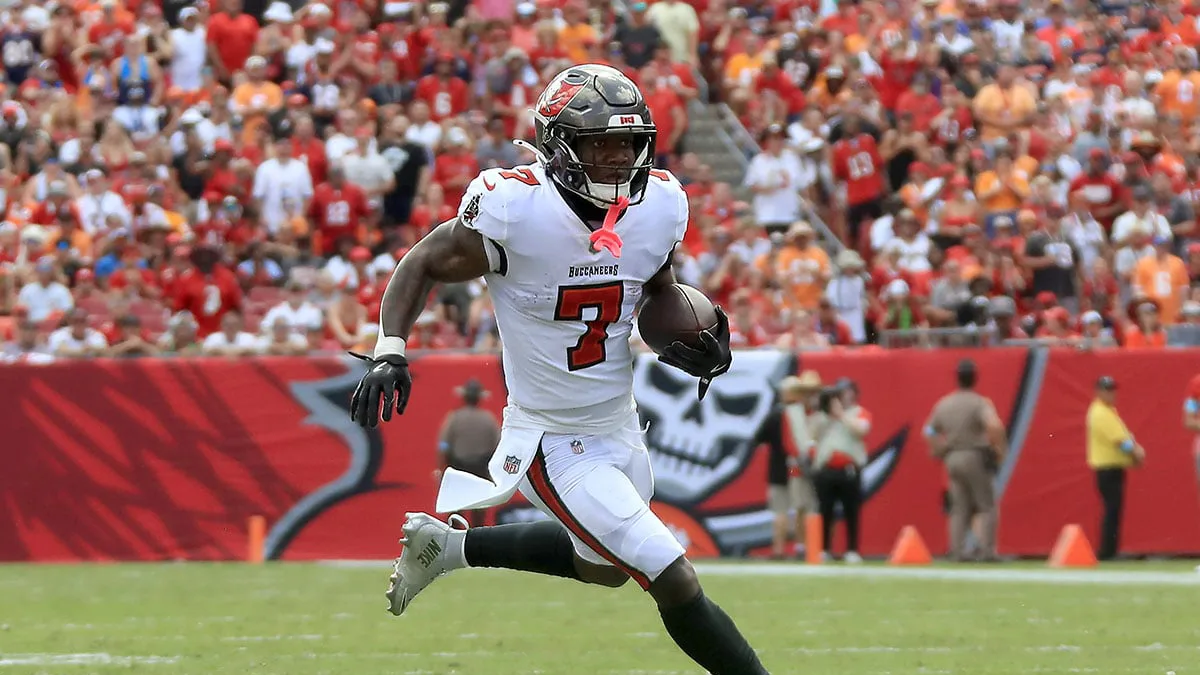
Who Is on the 2026 Fantasy Football Do Not Draft List?
If you’re wondering which players to avoid in your 2026 fantasy football draft, the answer isn’t necessarily the players who will disappoint—it’s the players whose Average Draft Position (ADP) is simply too expensive for the amount of risk they carry. Smart fantasy owners don’t just draft talented players; they draft players who outperform their draft cost.
Why Avoiding Players at ADP Wins Fantasy Championships
One of the biggest mistakes fantasy owners make is confusing good players with good draft picks.
A player can be extremely talented while still being a poor fantasy value if you’re paying near his ceiling. Drafting is all about maximizing value throughout your roster. Every early-round pick should provide both a high floor and league-winning upside.
When evaluating players, ask yourself:
- Does this player have realistic paths to outperform his ADP?
- How much downside exists if everything doesn’t go perfectly?
- Are there comparable players available a round or two later?
- Am I paying for proven production or projected production?
The players below aren’t necessarily “do not draft” players.
They’re do not draft at their current cost players.
2026 Fantasy Football Do Not Draft List (At Cost)
De’Von Achane (RB — MIA)
Why he’s difficult to trust at cost
- Electric talent, but talent alone doesn’t erase surrounding concerns.
- Entering a new offensive system with uncertainty.
- Miami could be transitioning into a rebuilding year.
- Negative game scripts may limit rushing opportunities.
- Current ADP leaves little room for disappointment.
Fantasy Recommendation: Draft Achane only if he slips below his current ADP rather than paying full price for an uncertain offensive environment.
George Pickens (WR — DAL)
Why he’s difficult to trust at cost
- Weekly volatility has followed him throughout his career.
- Paying WR1 prices for a player who profiles more like a WR2.
- Boom-or-bust production makes lineup decisions frustrating.
- Target consistency remains a concern.
Fantasy Recommendation: Let someone else pay WR1 prices and look for more reliable production in the same draft range.
Malik Nabers (WR — NYG)
Why he’s difficult to trust at cost
- Injury recovery remains a concern.
- Current ADP assumes he’ll be fully healthy immediately.
- Limited margin for setbacks during preseason.
- Too much risk compared to similarly priced receivers.
Fantasy Recommendation: Monitor his health closely, but avoid drafting him unless his price falls significantly.
Travis Etienne (RB — NO)
Why he’s difficult to trust at cost
- Alvin Kamara still presents meaningful competition.
- Backfield workload remains uncertain.
- Current ADP doesn’t reflect the possibility of a committee.
- Hard to justify paying premium RB prices.
Fantasy Recommendation: Wait until Etienne falls below market value before considering him.
Ladd McConkey (WR — LAC)
Why he’s difficult to trust at cost
- More competition for targets than fantasy owners may realize.
- Chargers still project as a run-first offense.
- Volume may not justify his current draft position.
- Limited ceiling if passing attempts remain low.
Fantasy Recommendation: Pass at ADP and target receivers with clearer paths to elite target volume.
Bucky Irving (RB — TB)
Why he’s difficult to trust at cost
- Smaller frame raises durability questions.
- Coming off an injury.
- Hasn’t yet put together multiple seasons of elite production.
- Current ADP assumes another major leap forward.
Fantasy Recommendation: Let another fantasy owner pay for his previous breakout while you target safer running backs nearby.
Luther Burden III (WR — CHI)
Why he’s difficult to trust at cost
- Tremendous athletic upside.
- Exciting fit in Ben Johnson’s offense.
- Still largely projecting future development.
- Paying for potential instead of proven production.
Fantasy Recommendation: Burden is an exciting dynasty investment, but redraft fantasy owners should be cautious at his current price.
Harold Fannin Jr. (TE — CLE)
Why he’s difficult to trust at cost
- Outstanding prospect.
- Sits at the top of a significant tier break at tight end.
- Premium cost makes it difficult to justify.
- Similar production may be available later.
Fantasy Recommendation: Either draft an elite tight end earlier or wait and attack the next tier later.
DK Metcalf (WR — PIT)
Why he’s difficult to trust at cost
- No longer in his athletic prime.
- Aaron Rodgers may struggle to maximize Metcalf’s vertical skill set.
- Offensive fit creates questions.
- Limited confidence in consistent explosive production.
Fantasy Recommendation: There are safer wide receiver options with similar upside in the same draft range.
Travis Hunter (WR — JAX)
Why he’s difficult to trust at cost
- Reports suggest an increased emphasis on defense.
- Plenty of competition for offensive opportunities.
- Difficult to project consistent volume.
- Ceiling may never be reached.
Fantasy Recommendation: Hunter is an exciting player, but the uncertainty of offensive reps makes him difficult to draft almost anywhere.
Jonathon Brooks (RB — CAR)
Why he’s difficult to trust at cost
- Two consecutive knee injury-shortened seasons.
- Durability concerns remain significant.
- Even a healthy return comes with workload uncertainty.
- Too much risk relative to current ADP.
Fantasy Recommendation: Let someone else gamble on the comeback while you invest in healthier backs.
Chris Godwin (WR — TB)
Why he’s difficult to trust at cost
- Past his prime.
- Injuries have become an increasing concern.
- Limited week-winning upside.
- Lower ceiling than similarly drafted receivers.
Fantasy Recommendation: Godwin remains a solid NFL receiver, but fantasy owners should seek more upside in this draft range.
Zach Charbonnet (RB — SEA)
Why he’s difficult to trust at cost
- Returning from injury.
- Projects to split work.
- First-round rookie competition limits upside.
- Difficult path to a feature workload.
Fantasy Recommendation: He’s worth considering as a late-round value, but I have little faith in hitting the draft button on him at this point.
Omar Cooper Jr. (WR — NYJ)
Why he’s difficult to trust at cost
- First-round talent isn’t the concern.
- Offensive environment creates major questions.
- No obvious path to high-end target volume.
- Difficult to envision immediate fantasy consistency.
Fantasy Recommendation: Dynasty owners can be patient, but redraft fantasy owners should let someone else take the gamble.
Draft Value Beats Draft Talent Every Time
Winning fantasy football drafts isn’t about collecting the biggest names—it’s about finding the best values.
Every player on this fantasy football Do Not Draft list has talent. Some may even finish with strong fantasy seasons. The issue isn’t whether they’re good players; it’s whether they’re worth the price fantasy owners currently have to pay.
The best fantasy owners consistently avoid paying for ceiling outcomes and instead target players who can outperform expectations. Stay disciplined, trust your rankings over ADP, and don’t be afraid to let someone else overpay for hype.
Do Not Draft List: Frequently Asked Questions
It means a player is overpriced relative to his expected production. If the player falls below his ADP, he may become a strong value.
No. The goal is to avoid drafting them at their current market price. If they slide well beyond ADP, many become excellent draft values.
Average Draft Position helps identify where players are typically selected. Comparing ADP to your own rankings helps uncover bargains and avoid overpriced players.
Not always. Situation, opportunity, injury risk, offensive environment, and competition all affect fantasy value.
Paying for a player’s absolute ceiling instead of drafting players who have room to outperform their draft position.