
The biggest fantasy football surprises so far include unexpected stars who have outperformed their draft-day expectations and disappointing players who have left fantasy owners searching for answers. From Brock Purdy’s elite quarterback production to Kyle Pitts’ continued struggles, this season has delivered plenty of unexpected results.
Identifying these surprises can help fantasy owners make smarter lineup decisions, capitalize on breakout performances, and avoid holding onto players who aren’t delivering. Let’s look at 12 players who have defied expectations, for better or worse, and what fantasy owners should do with them moving forward.
Quarterbacks: Unexpected Stars and Disappointments
Brock Purdy (QB – 49ers)
- Elite production: Purdy has jumped from a steady low-end QB1 or high-end QB2 to a legitimate top-three fantasy quarterback.
- A major leap: His production has exceeded what most fantasy owners expected coming into the season.
- A weekly difference-maker: Purdy has delivered the kind of production that can give fantasy owners a significant advantage at quarterback.
Fantasy Recommendation: Keep starting Purdy as an elite QB1 and treat him as a premium asset in trade discussions.
Kirk Cousins (QB – Raiders)
- More than a placeholder: Many expected Cousins to hold down the starting job until Mendoza was ready, particularly if the Raiders struggled.
- Driving success: Instead, Cousins has played a significant role in the Raiders’ success this season.
- QB1 production: His fantasy output has made him much more valuable than the temporary solution many anticipated.
Fantasy Recommendation: Start Cousins confidently as a QB1 while his production remains strong, but consider selling high if another fantasy owner values him as a long-term answer.
Justin Herbert (QB – Chargers)
- Expectations fell short: With Mike McDaniel calling plays, many expected Herbert to return to the fantasy QB1 conversation.
- A disappointing season: Instead, Herbert has struggled to produce consistent fantasy value.
- Limited usability: Outside of deep Superflex leagues, he has been difficult to justify in starting lineups.
Fantasy Recommendation: Bench Herbert in standard one-quarterback leagues until his production improves, while keeping him rostered in deeper formats where quarterback depth matters.
Running Backs: Workloads and Breakouts Defying Expectations
Kyren Williams (RB – Rams)
- Corum was expected to cut into his workload: Many fantasy owners anticipated a much closer split between Williams and Blake Corum.
- Williams remains the lead back: The workload has been closer to 65/35 than the anticipated 50/50 split.
- Top-five production: Williams has reinforced his status as one of fantasy football’s most reliable running backs.
Fantasy Recommendation: Keep Williams in your lineup as a weekly RB1 and resist selling him simply because Corum remains involved.
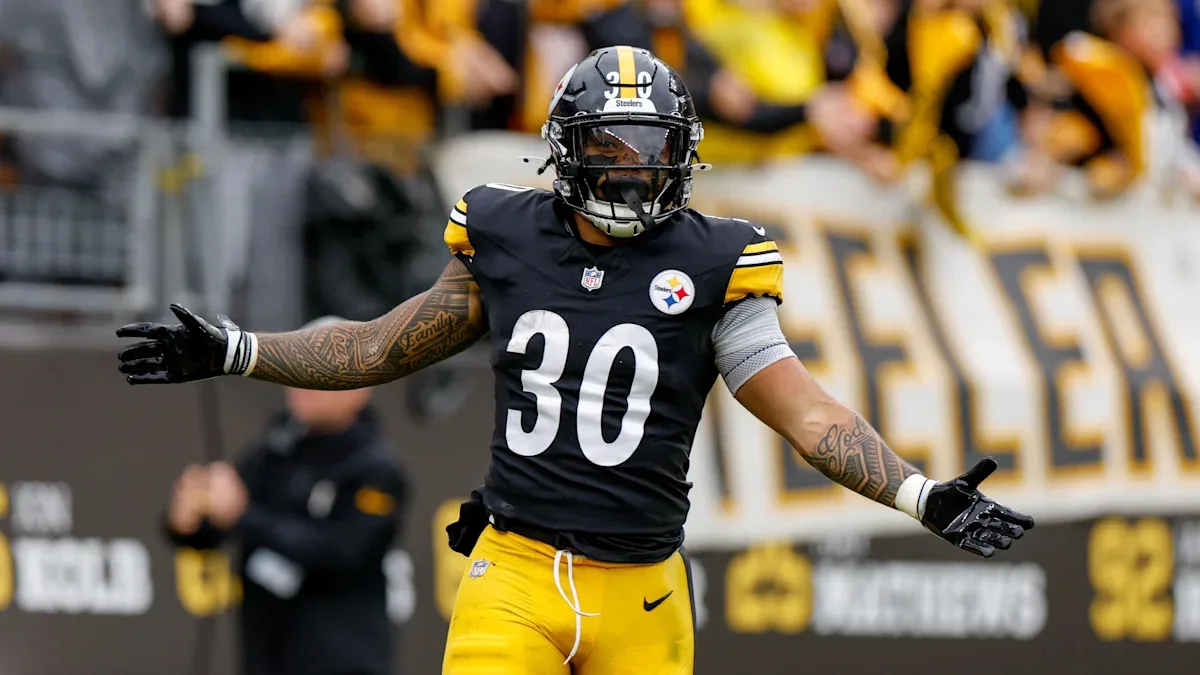
Jaylen Warren (RB – Steelers)
- A complementary back no more: Warren was widely viewed as a player better suited to a supporting role than a feature workload.
- Proving the doubters wrong: His production has matched that of an RB1 despite the doubts about his ability to lead a backfield.
- A major fantasy value boost: Warren has emerged as a much more valuable asset than many fantasy owners anticipated.
Fantasy Recommendation: Start Warren as an RB1 while his workload and production support that role, and explore trade offers if another owner is willing to pay a premium.
Omarion Hampton (RB – Chargers)
- A breakout season was expected: Hampton entered the year with plenty of excitement and the potential to establish himself as a featured back.
- A frustrating workload split: Instead, he has shared backfield opportunities rather than dominating the touches.
- Offensive struggles: The Chargers’ offensive problems have made it harder for Hampton to deliver consistent fantasy production.
Fantasy Recommendation: Treat Hampton as a matchup-dependent starter rather than an automatic RB1, and avoid paying a breakout-level price until his workload or offensive situation improves.
Wide Receivers: Surprising Stars and Underwhelming Investments
Christian Watson and Matthew Golden (WR – Packers)
- Watson is staying healthy: Given his injury history, simply remaining on the field has been a surprise, and his production has been even better.
- Top-five receiver upside realized: Watson has played like one of the league’s elite fantasy wide receivers.
- Golden has joined the party: Matthew Golden has also emerged as a surprise WR1, giving Green Bay two highly productive fantasy options.
Fantasy Recommendation: Start both receivers with confidence while their production holds, but consider Watson’s injury history and Golden’s sustainability when evaluating sell-high offers.
Denzel Boston (WR – Browns)
- An unexpected rookie leader: Boston wasn’t widely expected to emerge as Cleveland’s best rookie receiver.
- Immediate fantasy relevance: Rather than merely showing developmental promise, he has produced at a mid-WR2 level.
- A valuable surprise: His performance has made him far more than a speculative rookie stash.
Fantasy Recommendation: Start Boston as a WR2 when matchups are favorable, and hold him as a potential season-long difference-maker if his target volume remains consistent.
Jaylen Waddle (WR – Broncos)
- A trade created big expectations: Many fantasy owners believed Denver’s offseason move for Waddle signaled a major role and potential WR1 production.
- Inconsistent results: Outside of an explosive Week 2 performance, Waddle has been largely pedestrian.
- A low-end WR3: His weekly output has fallen well short of what fantasy owners hoped to receive.
Fantasy Recommendation: Keep Waddle as a FLEX play in most formats until he demonstrates greater consistency, and explore trading him if another owner still believes in his WR1 upside.
Tight Ends: Breakouts and Familiar Frustrations
Isaiah Likely (TE – Giants)
- A sleeper who exceeded expectations: Likely entered the season with sleeper appeal, but even optimistic fantasy owners may not have anticipated this level of production.
- TE2 numbers: He has delivered production that puts him among fantasy football’s top two tight ends so far.
- A potential positional advantage: Reliable production at tight end is difficult to find, making Likely’s emergence especially valuable.
Fantasy Recommendation: Start Likely as an elite fantasy tight end while his production continues, and consider selling high only if the return meaningfully upgrades another position.
George Kittle (TE – 49ers)
- A cautious return was expected: Many anticipated that Kittle would be eased back into action following his injury.
- Back among the elite: Instead, he has returned to the top-five fantasy tight end conversation.
- Purdy’s production helps: The 49ers’ strong passing offense has created opportunities for Kittle to make an immediate impact.
Fantasy Recommendation: Start Kittle as a top-tier TE1 whenever healthy, and avoid selling him at a discount simply because he was expected to have a gradual return.
Kyle Pitts (TE – Falcons)
- Another breakout that never arrived: After expectations of a major leap, Pitts has once again disappointed fantasy owners.
- Mid-TE3 production: His current output has left him well outside the group of reliable starting tight ends.
- A costly draft-day investment: Fantasy owners who reached for Pitts have paid the price, particularly in leagues where tight end depth is limited.
Fantasy Recommendation: Bench Pitts in most formats unless your options are limited. Consider cutting or trading him rather than continuing to start him based on name value alone.
Final Thoughts: Turn Fantasy Football Surprises Into an Advantage
The biggest fantasy football surprises so far have reinforced an important lesson: draft-day expectations shouldn’t dictate in-season decisions. Brock Purdy, Kyren Williams, Jaylen Warren, and Christian Watson have outperformed expectations, while Justin Herbert, Omarion Hampton, Jaylen Waddle, and Kyle Pitts have left fantasy owners wanting more.
The key is knowing what to do with that information. Buy into breakouts when the workload and production support them. Sell high when a player’s value may exceed his likely future output. And don’t be afraid to bench a disappointing player, regardless of where you drafted him.
Fantasy football success comes from adjusting as the season unfolds. Keep evaluating player usage, production, and opportunity, and use these fantasy football surprises to gain an edge over your competition.