
The fantasy football season is reaching a critical point. With the second half of the 2026 NFL season approaching, fantasy owners need to identify players whose production could decline or whose roles may not support consistent results.
Not every disappointing performance is a reason to panic. However, injuries, shrinking workloads, and unfavorable offensive situations can signal trouble ahead.
These five fantasy football players to worry about deserve extra scrutiny as the playoff race heats up. Some could be worth trading before their value falls, while others may need to move to the bench until their outlook improves.
1. Aaron Jones (RB – Vikings)
Concern Level: High | Recommendation: Sell if possible
Jones faces two significant obstacles heading into the second half: injury concerns and increased competition for touches.
- Jordan Mason is back: Increased competition could limit Jones’ opportunities, even when he’s healthy.
- The knee injury is concerning: Jones has dealt with a knee issue that raises questions about his availability and effectiveness.
- His workload could shrink: Even after returning to full health, Jones may struggle to reclaim his previous share of the backfield.
Fantasy outlook: Jones is a player to worry about because both his health and workload are uncertain. If another fantasy owner still values him as a dependable RB2, consider exploring trade offers before his role becomes less attractive.
2. J.K. Dobbins (RB – Broncos)
Concern Level: High | Recommendation: Explore trade offers
Dobbins has delivered useful fantasy production, but his workload could be heading in the wrong direction.
- Competition is increasing: Rookie Jonah Coleman has emerged as a threat to Dobbins’ role.
- Playing time is a concern: Dobbins saw his snap share decline significantly in Week 7.
- Touchdowns may be masking the problem: Scoring in consecutive games can help fantasy production, but touchdowns aren’t always sustainable.
Fantasy outlook: Dobbins remains capable of producing useful fantasy numbers, but a growing committee could limit his weekly ceiling. Fantasy owners should be cautious about relying on him as a consistent RB2 if his opportunities continue to decline.
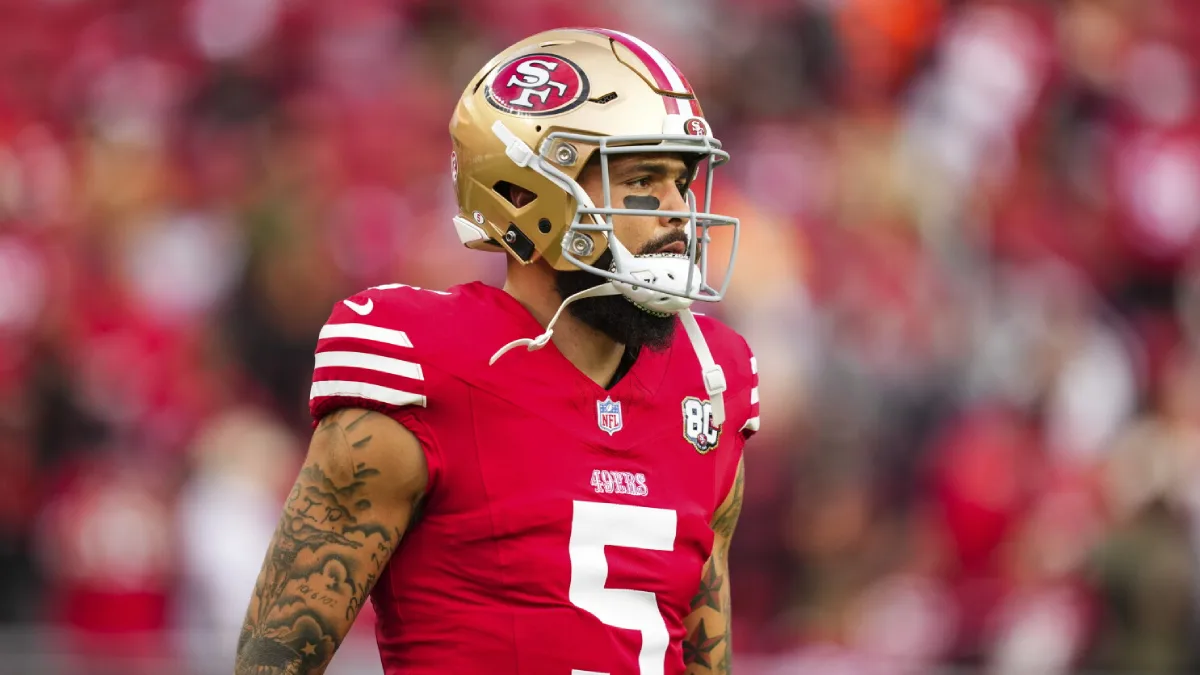
3. Mike Evans (WR – 49ers)
Concern Level: High | Recommendation: Sell before his value drops
Evans has remained productive when healthy, but his lingering injury problems are becoming increasingly difficult to ignore. He’s now dealing with an Achilles issue that raises concerns about his availability for the second half of the season.
- Injuries are piling up: Evans has battled multiple health issues and aggravated his Achilles during the Week 6 game against Washington.
- The expected return isn’t a guarantee: He’s expected to return after San Francisco’s Week 8 bye, but another setback could cost him additional games.
- His production still holds value: Evans has shown he can produce when available, giving fantasy owners an opportunity to trade him while his value remains relatively strong.
- The downside is significant: Another injury could leave fantasy owners without a reliable contributor during the playoff push.
Fantasy outlook: Evans is a strong sell candidate for fantasy owners who can get a reasonable return. His talent isn’t in question, but his health is becoming a major obstacle.
4. Jake Ferguson (TE – Cowboys)
Concern Level: Moderate to High | Recommendation: Sell or bench
Ferguson’s fantasy production has been frustratingly inconsistent. Outside of his 20-point performance against Washington in Week 2, he hasn’t topped 10 fantasy points in another game this season.
- One big game is carrying his production: Ferguson hasn’t consistently replicated his Week 2 performance.
- Dallas is leaning on the run: Javonte Williams has become a significant part of the offense, potentially limiting passing volume.
- He’s competing for targets: CeeDee Lamb and George Pickens are the Cowboys’ primary receiving options, leaving Ferguson fighting for opportunities.
- Touchdowns are difficult to predict: Without consistent targets and yardage, Ferguson may need to score to deliver a useful fantasy performance.
Fantasy outlook: Ferguson is becoming difficult to trust as a starter. His limited target volume makes him reliant on touchdowns, which is a dangerous foundation for consistent fantasy production.
5. Josh Downs (WR – Colts)
Concern Level: Moderate to High | Recommendation: Reassess his weekly value
Downs has struggled to turn his opportunities into consistent fantasy production. Although he’s capable of contributing to Indianapolis’ passing game, his efficiency and scoring have been disappointing.
- Efficiency is a concern: Downs hasn’t consistently generated enough yardage to deliver strong fantasy performances.
- Touchdowns are missing: Without regular trips to the end zone, his weekly ceiling remains limited.
- His role could change: Competition for targets could make it more difficult for Downs to generate consistent production.
- The margin for error is small: In a crowded receiving corps, a lack of explosive plays or touchdowns can quickly make a player difficult to start.
Fantasy outlook: Downs is worth monitoring, particularly in PPR leagues. If his opportunities aren’t translating into production, fantasy owners may need to lower their expectations and consider alternative options.
Final Thoughts: Fantasy Football Players to Worry About in 2026
The best fantasy owners know when to remain patient and when to act before a player’s value declines. Injuries, shrinking workloads, and limited opportunities can all signal trouble for the second half of the season.
Aaron Jones and J.K. Dobbins deserve scrutiny because their workloads could become less dependable. Mike Evans carries significant injury risk, while Jake Ferguson’s limited target volume makes him difficult to trust. Josh Downs is another player whose inconsistent production could leave fantasy owners searching for alternatives.
Don’t make trades simply because a player has disappointed. Evaluate the underlying reasons for the decline and determine whether the situation is likely to improve.
If another fantasy owner is willing to pay for a player’s past production rather than his current outlook, you may have an opportunity to sell before his value falls further.
The goal is to recognize warning signs early, protect your roster’s weekly floor, and avoid carrying unnecessary risk into the fantasy playoffs.