
What We Learned From Week 1 of Fantasy Football
Week 1 of the 2026 fantasy football season delivered plenty of information that could reshape the way fantasy owners approach the rest of the year. Several running backs established themselves as true workhorses, while unexpected committees emerged in other backfields. A handful of players also made strong early cases for bigger roles, and the tight end position produced some particularly encouraging performances.
It is important not to overreact to one game, but Week 1 usage can reveal how teams actually intend to deploy their players. Snap shares, touches, routes, targets and red-zone opportunities often tell a more useful story than the box score alone.
Here are the biggest Week 1 fantasy football takeaways to keep in mind heading into Week 2.
1. Jahmyr Gibbs Is a True Workhorse
Any lingering concerns about a split backfield in Detroit were put to rest quickly.
Jahmyr Gibbs played 57 of 77 offensive snaps and handled 34 total touches, turning that massive workload into 156 rushing yards and two touchdowns.
The important takeaway isn’t simply the production. It is the combination of playing time and volume.
Gibbs operated as the clear focal point of the Lions’ offense, giving him the workload profile fantasy owners want from an elite RB1. If this usage continues, he has the opportunity to challenge for the top tier of fantasy running backs all season.
Takeaway: Gibbs’ Week 1 workload confirms that his ceiling is much higher than a committee-dependent RB1.
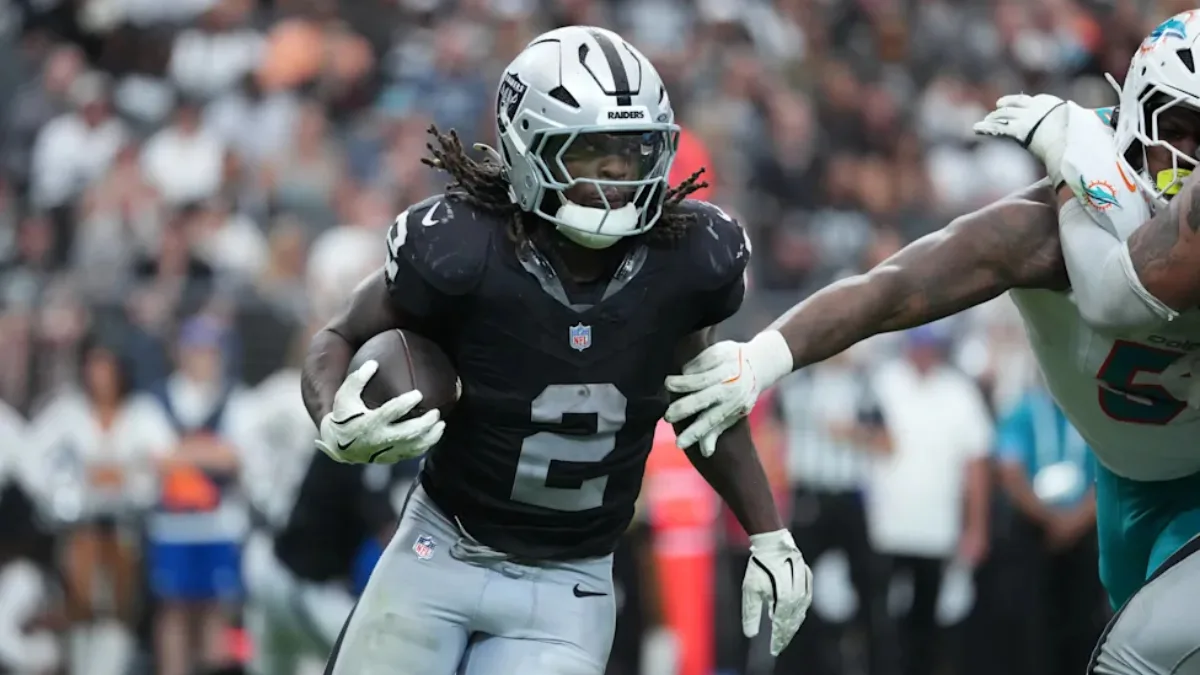
2. Ashton Jeanty Doesn’t Look Hampered by His Injury
There were legitimate questions about whether Ashton Jeanty’s preseason injury would limit his workload once the regular season began. Those concerns were quickly put to rest.
Jeanty played 74% of Las Vegas’ offensive snaps, handled 23 carries, caught 6 passes, and finished with 2 touchdowns, showing no obvious signs that the injury was restricting his effectiveness or usage.
Backup Mike Washington did make his presence felt with seven carries for 41 yards, but his involvement didn’t significantly cut into Jeanty’s workload. Jeanty remained the clear centerpiece of the Raiders’ rushing attack and demonstrated the three-down utility fantasy owners were hoping to see.
After one game, the biggest takeaway is that Jeanty appears healthy and capable of handling a substantial workload despite the preseason concern.
Takeaway: Jeanty’s preseason injury doesn’t appear to be limiting him, and Washington’s involvement wasn’t enough to threaten his workhorse role.
3. Derrick Henry’s Goal-Line Dominance Isn’t Going Anywhere
Derrick Henry reminded everyone why his age doesn’t automatically make him a fade.
The Baltimore running back exploded for 144 rushing yards and three touchdowns, once again demonstrating the fantasy value of his combination of workload, explosiveness and goal-line opportunities.
Touchdowns will naturally fluctuate from week to week, but Henry’s role near the goal line remains one of his biggest fantasy advantages.
Takeaway: Don’t assume Henry’s touchdown upside has disappeared. Baltimore still has plenty of incentive to lean on him in scoring situations.
4. Christian McCaffrey’s Workload Deserves Monitoring
Christian McCaffrey remains an RB1, but his Week 1 usage was worth watching.
He played just 36 of San Francisco’s 65 snaps (55.4%), suggesting the 49ers may be willing to provide him with more relief work than fantasy owners have become accustomed to seeing.
That doesn’t necessarily mean McCaffrey is headed for a disappointing season. His talent and offensive role still provide a high weekly floor. However, fewer snaps can mean fewer opportunities for the massive touch totals that have historically made him a difference-maker.
Takeaway: McCaffrey remains a weekly starter, but fantasy owners should monitor whether his snap share rebounds.
5. Minnesota Has a Legitimate RB Committee
The Minnesota backfield looks much more like a tandem than a traditional starter-and-backup arrangement.
Jordan Mason received 15 carries, while Aaron Jones had 12. That relatively even distribution suggests Minnesota intends to manage Jones’ workload rather than simply handing him the backfield.
Jones can still produce efficiently, but his path to elite fantasy numbers becomes more difficult if Mason consistently receives meaningful early-down work.
Takeaway: Treat this as a committee until Minnesota proves otherwise.
6. Jalen Coker Is the Week 1 Waiver-Wire Name to Know
One of the biggest Week 1 breakouts came from Jalen Coker.
Coker played 57 snaps, ran 40 routes and earned nine targets. He converted that opportunity into an explosive eight catches for 138 yards and two touchdowns in a high-scoring shootout.
The box score alone makes him an obvious waiver-wire candidate, but the underlying usage is even more encouraging. Nine targets and 40 routes indicate that Coker wasn’t simply the beneficiary of a couple of broken plays.
Fantasy owners shouldn’t automatically expect another two-touchdown performance, but the opportunity makes him one of the most intriguing players to add heading into Week 2.
Takeaway: Coker has both the production and underlying volume to justify aggressive waiver-wire interest.
7. Chris Olave Reminds Us Why Volume and Talent Matter
Chris Olave exploded for 182 receiving yards, showcasing the kind of big-play ability that gives him legitimate WR1 upside.
The most encouraging part was his downfield involvement. Olave’s ability to generate explosive plays gives him a massive weekly ceiling, particularly when New Orleans is forced into high-volume passing situations.
After one week, the biggest takeaway isn’t that Olave will post 182 yards every Sunday. It’s that his talent and usage create the potential for truly difference-making fantasy performances.
Takeaway: Olave belongs firmly in the conversation as a high-end fantasy WR1.
8. The Tight End Position May Finally Be Giving Fantasy Owners Answers
The tight end position produced several encouraging performances in Week 1.
Dalton Kincaid led Buffalo’s passing attack with five receptions for 130 yards, providing the type of explosive production fantasy owners have been waiting to see. His expanded role suggests health may have been the biggest obstacle to his production previously.
Isaiah Likely was even more encouraging from a volume perspective. He commanded a 27.6% target share.
Meanwhile, Dallas Goedert missed just three offensive snaps for Philadelphia, reinforcing his role as a major part of the Eagles’ passing attack. Trey McBride also delivered with nine receptions, further establishing himself as one of the most reliable players at the position.
Takeaway: Kincaid, Likely, Goedert and McBride all provided reasons to believe the tight end position could have more reliable options in 2026.
9. Tyler Shough Could Create a Fantasy-Friendly Saints Offense
Tyler Shough’s season debut was far from perfect, but fantasy owners should pay attention to the upside.
Shough threw for 410 yards in a high-scoring game and wasn’t afraid to push the ball downfield, with more than 20% of his attempts classified as deep shots.
The turnovers are obviously concerning, and efficiency will need to improve. But from a fantasy perspective, aggressive passing volume can be extremely valuable.
If New Orleans continues playing in high-scoring games and Shough maintains this level of passing volume, the entire Saints passing game could benefit.
Takeaway: Shough’s aggressive approach gives New Orleans pass-catchers significant fantasy upside.
10. Caleb Williams’ Rushing Floor Makes Him a High QB1
Caleb Williams looked like a completely different fantasy quarterback this season compared to the start of last year.
Chicago produced a historic 59-point offensive explosion, while Williams combined rushing ability with aggressive downfield passing.
That combination is exactly what fantasy owners want from a quarterback. Passing production provides the ceiling, while rushing ability creates a weekly floor that is difficult for traditional pocket passers to match.
It is far too early to assume Williams will produce at this level every week, but his Week 1 performance reinforces the idea that he has legitimate top-five quarterback upside.
Takeaway: Williams’ rushing ability and offensive environment make him one of the most intriguing fantasy quarterbacks moving forward.
Other Week 1 Fantasy Football Takeaways
Kyren Williams Doesn’t Have the Backfield to Himself
The Los Angeles backfield also produced a notable warning sign for fantasy owners.
Kyren Williams led the Rams in overall snaps with a 63.9% snap share, but Blake Corum was much more involved than expected. The two backs split early-down carries nearly evenly, with Williams receiving 11 and Corum 10.
Williams can still be highly productive, particularly if he maintains his advantage in passing-game and scoring opportunities. But Corum’s involvement makes it harder to project Williams as a true bellcow.
Takeaway: Williams remains valuable, but Corum’s Week 1 usage puts a ceiling on his workload.
Sam Darnold’s Injury Could Change Seattle’s Fantasy Outlook
Sam Darnold’s early exit forced Drew Lock into action and could have significant fantasy implications if Darnold misses additional time.
Lock heavily targeted Jaxon Smith-Njigba, which is obviously encouraging for the wide receiver. However, Seattle’s overall passing efficiency could decline if Lock is forced to start for an extended stretch.
This is especially important in Superflex leagues, where quarterback availability carries considerably more weight.
Takeaway: Monitor Darnold’s status closely because his availability could affect the value of multiple Seattle players.
What These Week 1 Fantasy Football Takeaways Mean for Week 2
The biggest lesson from Week 1 is that usage matters more than the box score alone.
Gibbs and Jeanty demonstrated massive workloads. Coker turned strong route and target volume into a breakout performance. Minnesota and Los Angeles showed that their backfields may be more complicated than anticipated. Meanwhile, several tight ends received the type of volume that can create weekly stability at a difficult position.
Fantasy owners should resist making drastic decisions based on a single game, but Week 1 provides valuable clues about how teams intend to use their players.
The best approach heading into Week 2 is to separate real changes in opportunity from random statistical variance.
The Bottom Line on Week 1 Fantasy Football Takeaways
Week 1 gave fantasy owners plenty of new information, but the most important developments were centered around volume, playing time and role.
Jahmyr Gibbs and Ashton Jeanty established themselves as true workhorse backs, while Christian McCaffrey, Aaron Jones and Kyren Williams face workload questions. Jalen Coker emerged as an early waiver-wire priority, while Chris Olave showed why he remains a high-end WR1. At tight end, Dalton Kincaid, Isaiah Likely, Dallas Goedert and Trey McBride provided plenty of optimism.
Quarterbacks also delivered some major fantasy signals, with Caleb Williams showing QB1 upside and Tyler Shough demonstrating how aggressive passing volume can create opportunities for an entire offense.
There is still a long way to go in the 2026 season, but these takeaways provide an early roadmap for identifying which players may be headed toward bigger roles—and which preseason assumptions may already need to be reconsidered.