
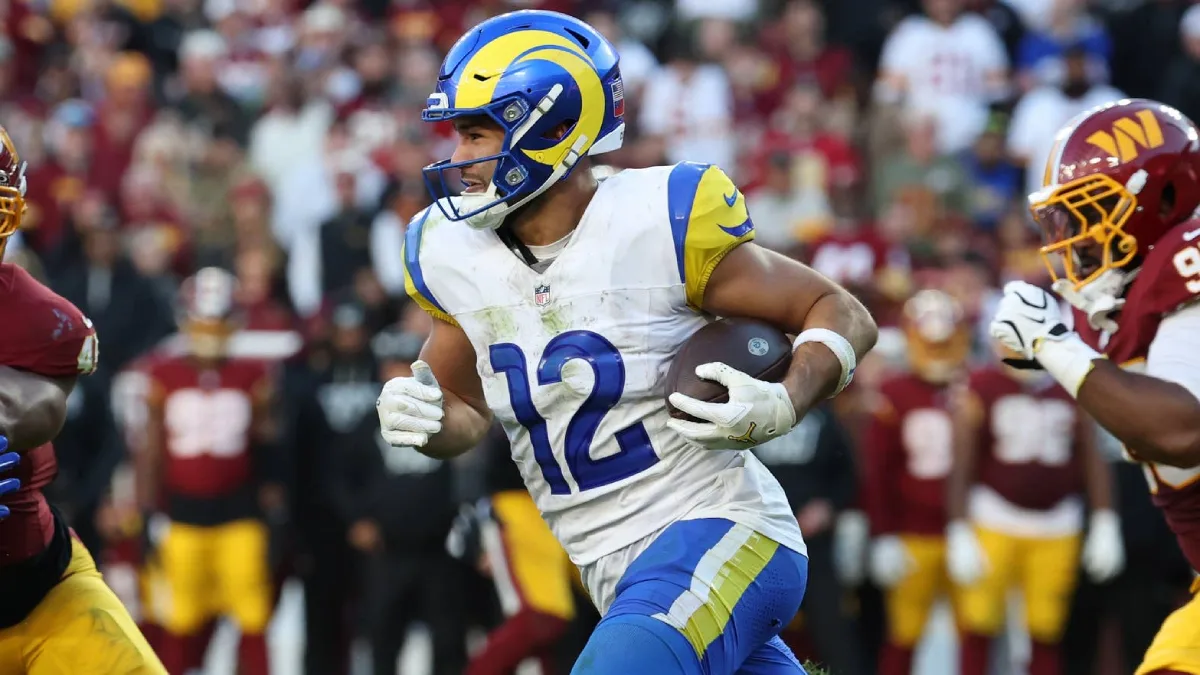
Week 9 of the fantasy football season delivered some significant developments that could reshape fantasy lineups heading into the second half of the year. From changing backfield situations and explosive quarterback performances to major injuries and concentrated offensive workloads, there was plenty for fantasy owners to take away.
Several running backs strengthened their grip on featured roles, while others found themselves caught in frustrating committees. Meanwhile, C.J. Stroud reminded everyone of his fantasy ceiling, Joe Burrow continued his hot streak, and injuries to key players created immediate opportunities on the waiver wire.
Let’s look at what we learned from Week 9 of the fantasy football season and which developments could have the biggest impact on the fantasy football stretch run.
1. Workhorse Backfields Are Shifting
Running back workloads continue to evolve, and Week 9 provided some important clues about which players fantasy owners can trust down the stretch. Some backfields are becoming easier to navigate, while others are turning into frustrating committees.
Jonah Coleman (RB – Denver Broncos)
- Coleman has solidified his grip on Denver’s featured running back role, handling 17 carries for 57 yards and a touchdown in Week 9.
- His continued involvement in high-volume touches and red-zone opportunities makes him increasingly valuable.
- Heading into the bye week, Coleman looks like a high-upside RB2 for the fantasy stretch run.
Kenneth Walker III (RB – Kansas City Chiefs)
- Walker delivered an elite Week 9 performance, scoring three touchdowns to power the Kansas City offense.
- His explosive running ability and involvement in high-leverage situations give him an extremely attractive fantasy profile.
- With his combination of workload and scoring potential, Walker remains a set-and-forget RB1.
Minnesota’s Backfield Committee
- Minnesota’s three-way backfield rotation created another frustrating situation for fantasy owners.
- DeeJay Dallas saw significant work on passing downs, limiting the opportunities available to Aaron Jones and Jordan Mason.
- The divided workload puts a cap on the snap counts and scoring ceilings of both Jones and Mason.
- Until one player establishes a more consistent role, this backfield remains difficult to trust in fantasy starting lineups.
What It Means for Fantasy Owners: Running back volume remains one of the most important factors in fantasy football. Coleman and Walker are benefiting from increasingly defined roles, while Minnesota’s committee is a reminder that talent alone doesn’t guarantee consistent production.
2. Quarterback Explosions and High-Octane Passing Attacks
Week 9 also reminded fantasy owners how quickly a quarterback can change the outlook of a fantasy offense. Both C.J. Stroud and Joe Burrow delivered impressive performances, reinforcing their ability to produce elite fantasy numbers when their passing attacks are clicking.
C.J. Stroud (QB – Houston Texans)
- Coming off Houston’s Week 8 bye, Stroud erupted against the Chargers with five touchdown passes in a 44-22 victory.
- The performance showcased his enormous fantasy ceiling when Houston’s passing offense operates at full strength.
- His ability to produce multiple touchdowns makes him a potential difference-maker for fantasy owners when the offense finds its rhythm.
Joe Burrow (QB – Cincinnati Bengals)
- Burrow continued his impressive stretch with 271 passing yards and three touchdowns in Week 9.
- He continues to generate elite fantasy production through his dynamic receiving combination of Ja’Marr Chase and Tee Higgins.
- With both receivers providing major playmaking ability, Burrow remains one of the more dangerous quarterbacks in fantasy football.
What It Means for Fantasy Owners: Quarterback production can swing fantasy matchups, particularly when offenses establish consistent connections in the passing game. Stroud demonstrated his week-winning upside, while Burrow continues to benefit from an elite group of receiving weapons.
3. Key Injury Fallout Creates Waiver Wire Opportunities
Unfortunately, injuries were another major storyline in Week 9. Several high-profile players suffered significant setbacks or raised concerns about their availability moving forward. For fantasy owners, these situations create both lineup challenges and potential waiver wire opportunities.
Puka Nacua (WR – Los Angeles Rams)
- Nacua is dealing with a sprained PCL/MCL and turf toe, resulting in a move to injured reserve.
- His absence leaves a massive hole in the Rams’ target distribution.
- Fantasy owners should monitor the Rams’ receiver rotation closely, as additional targets could create valuable waiver wire options.
Josh Jacobs (RB – Green Bay Packers)
- Jacobs is undergoing finger surgery and is expected to miss up to three weeks.
- His absence creates an immediate opportunity for the running backs behind him on Green Bay’s depth chart.
- Given Jacobs’ workload, his replacement could offer meaningful short-term fantasy value.
Patrick Mahomes (QB – Kansas City Chiefs)
- Mahomes briefly caused concern after suffering an elbow sprain scare during Week 9.
- Fortunately, he returned to finish the game, and subsequent testing showed no structural damage.
- He remains on track to start in Week 10, providing some much-needed reassurance for fantasy owners.
What It Means for Fantasy Owners: Injuries create some of the biggest opportunities of the fantasy football season. Nacua’s absence could redistribute valuable targets, while Jacobs’ recovery creates an immediate backfield situation worth monitoring. Fantasy owners should prioritize identifying potential replacements before the competition catches up.
4. Volume Concentration Continues to Drive Fantasy Value
One of the biggest lessons from Week 9 is that concentrated offensive workloads remain incredibly valuable. Even when efficiency isn’t ideal, consistent touches and targets provide fantasy owners with a dependable foundation.
Atlanta and Buffalo offered two good examples of why volume continues to matter.
Bijan Robinson and Drake London (Atlanta Falcons)
- Atlanta continues to funnel a significant portion of its offense through Robinson and London.
- Robinson remains heavily involved in the running game, while London continues to command a substantial share of the passing opportunities.
- Even when efficiency fluctuates, their consistent workloads provide a reliable fantasy floor.
- Both players remain dependable weekly starters with the potential to deliver difference-making performances.
James Cook III (RB – Buffalo Bills)
- Cook handled a massive 31 carries for more than 100 rushing yards in Week 9.
- The workload reinforces Buffalo’s commitment to using him as a central piece of its offensive game plan.
- His heavy involvement provides a strong foundation for consistent fantasy production, even when he isn’t finding the end zone.
- As long as Buffalo continues to lean on him this heavily, Cook should remain a reliable RB1 option.
What It Means for Fantasy Owners: Volume is often more predictable than efficiency. Players who consistently receive touches and targets are generally better bets for weekly fantasy production. Robinson, London, and Cook continue to demonstrate why opportunity should remain a major factor in fantasy lineup decisions.
Final Thoughts: Key Fantasy Football Takeaways From Week 9
Week 9 provided several important clues about how the fantasy football landscape is shaping up for the second half of the season. Workhorse running back roles are becoming clearer in some offenses, while frustrating committees are making other backfields difficult to trust. At quarterback, Stroud and Burrow reminded fantasy owners of the importance of high-powered passing attacks.
Injuries to Puka Nacua and Josh Jacobs also created immediate waiver wire opportunities, making the upcoming Week 10 waiver period particularly important. Meanwhile, the continued volume going to players like Bijan Robinson, Drake London, and James Cook reinforces the value of predictable offensive workloads.
As we move deeper into the fantasy football season, the lessons from Week 9 are straightforward:
- Prioritize workload: Consistent touches and targets remain the foundation of reliable fantasy production.
- Monitor changing backfields: New opportunities can create valuable fantasy starters, but committee situations can quickly become problematic.
- Attack the waiver wire: Injuries create opportunities for fantasy owners willing to act before their competition.
- Trust elite offensive roles: Players who consistently command a large share of their team’s offense deserve a place in weekly lineups.
The fantasy playoffs are getting closer, and every decision matters a little more. Pay attention to changing workloads, take advantage of emerging opportunities, and don’t be afraid to make moves before the rest of your league catches on.