
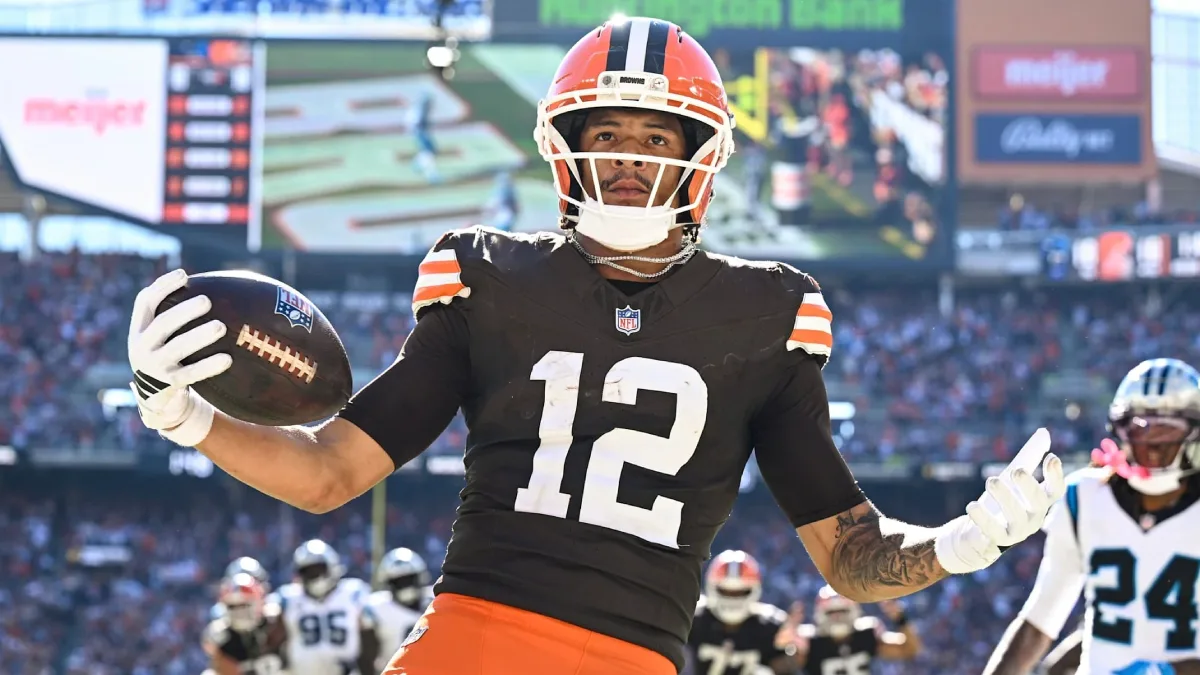
Which Early Season Fantasy Football Trends Matter?
The first few weeks of the fantasy football season are filled with noise.
One big game can dramatically change a player’s rankings. A touchdown can hide inefficient usage. An injury can temporarily reshape a depth chart. And a small sample size can make almost any trend look meaningful.
By Week 3, however, we’re starting to get enough information to separate some of the noise from the signal.
The most useful early season fantasy football trends aren’t necessarily about who has scored the most fantasy points. They’re about how players are being used.
Target share, routes, snap rates, red-zone opportunities and rushing involvement can tell us where production is likely to come from next.
Here are the early-season trends fantasy owners can actually start believing.
1. High-Volume Slot Receivers Are Back
Defenses continue to prioritize limiting explosive plays, forcing offenses to consistently win underneath.
That has created an environment where high-volume slot receivers can provide tremendous value, particularly in PPR formats.
The trend:
- Slot receivers are seeing heavy target volume on short and intermediate routes.
- Players with high Target per Route Run (TPRR) rates are consistently creating opportunities.
- Established target earners are providing more predictable weekly floors than low-volume deep threats.
Players showing the trend:
- Josh Downs, IND: Consistently commanding a significant share of the Colts’ passing-game opportunities.
- Stefon Diggs: Continuing to produce efficiently despite concerns about his age curve.
- Wan’Dale Robinson: Establishing himself as a high-volume underneath option.
What fantasy owners should do:
Don’t automatically chase the receiver who can score from anywhere on the field.
Instead, prioritize wide receivers who are consistently earning targets.
A receiver who sees 8–10 targets every week can be more valuable than a deep threat who needs a 50-yard touchdown to salvage his fantasy day.
The takeaway: Established slot targets with strong target shares should be valued as stable WR2/FLEX options, particularly in PPR leagues.
2. High-Value RB Touches Are Consolidating
Committee backfields aren’t going away.
But there is an important distinction between simply getting touches and controlling the touches that matter most.
The best running backs continue to dominate:
- Red-zone snaps
- Goal-line opportunities
- Passing-down work
- Routes run
- Two-minute offense snaps
- Overall scrimmage opportunities
Those touches create both a higher weekly floor and more touchdown upside.
The players showing the trend:
- Bijan Robinson: Continues to combine rushing volume with receiving and goal-line involvement.
- Christian McCaffrey: Remains heavily involved in multiple phases of the offense.
- Jahmyr Gibbs: Efficiency combined with strong red-zone usage continues to support elite RB1 production.
There are also situations moving in the opposite direction.
Veteran backs such as Travis Etienne can lose fantasy value when additional backs begin siphoning away touches, particularly if they aren’t dominating passing-game opportunities.
What fantasy owners should do:
Don’t panic-sell an elite running back after one poor fantasy performance.
Look underneath the box score.
If a player is still handling a strong percentage of his team’s red-zone work and routes, the underlying role may be perfectly healthy.
Conversely, be willing to move on from inefficient volume backs whose fantasy production depends heavily on touchdowns.
The takeaway: Volume matters, but high-value volume matters more.
3. Rookie WR Usage Is More Important Than Rookie Box Scores
Rookie wide receivers don’t always produce massive fantasy numbers immediately.
That’s especially true when they’re playing with inconsistent quarterbacks or offenses that haven’t fully figured themselves out.
But usage can tell us when a breakout is coming.
The 2026 rookie class is already showing signs that some young receivers can earn significant roles quickly.
The player showing the trend:
- Denzel Boston, CLE: His snap share has quickly climbed above 90%, while his route participation indicates that Cleveland is treating him like a full-time receiver.
That’s the type of development fantasy owners should pay attention to.
A rookie playing nearly every offensive snap is much more interesting than a rookie producing a few splash plays on limited opportunities.
What to watch:
- Snap percentage
- Route participation
- Target share
- Targets per route run
- Separation
- Intermediate route usage
A young receiver consistently earning 20% or more of the targets on his routes deserves attention even if his fantasy production hasn’t caught up yet.
The takeaway: Don’t wait for the breakout game. Target earning and playing time can signal the breakout before the box score does.
4. The Dual-Threat QB Advantage Is Growing
Quarterback scoring continues to reward players who can create fantasy points outside of traditional passing production.
Rushing yards provide something passing production can’t always guarantee: a relatively stable source of additional fantasy points.
That’s why quarterbacks who can consistently contribute with their legs remain so valuable.
The trend:
- Designed rushing opportunities create a dependable floor.
- Scrambles can turn broken plays into fantasy production.
- Red-zone rushing creates touchdown upside.
- Efficient offenses provide additional scoring opportunities.
Players showing the trend:
- Brock Purdy: His rushing contribution has added another dimension to his fantasy profile.
- Josh Allen: Continues to benefit from elite passing production and rushing ability.
- Patrick Mahomes: His combination of passing and rushing upside remains valuable, particularly when he can contribute near the goal line.
The opposite profile can create more volatility.
Quarterbacks who operate almost exclusively from the pocket and rely on short-area passing need either significant volume or strong touchdown production to consistently produce difference-making fantasy weeks.
What fantasy owners should do:
When evaluating quarterbacks, don’t just look at passing yards.
Ask:
- How much does he run?
- How often does he reach the red zone?
- How many passes does the offense generate?
- Can he create fantasy points when the passing game isn’t clicking?
The takeaway: Quarterbacks without rushing production or consistently high passing volume are more dependent on matchup and touchdown variance.
Strategic Action Items for Fantasy Owners
These early season fantasy football trends aren’t just observations. They can help shape roster decisions.
Trade for Target Earners
Look for receivers commanding 22% or more of their team’s targets even if their fantasy totals aren’t impressive yet.
A lack of touchdowns can make an otherwise strong underlying profile look mediocre.
Trim Committee RBs
Look for opportunities to package low-upside committee backs in a 2-for-1 deal.
Prioritize running backs who control:
- Red-zone work
- Passing-down snaps
- Goal-line opportunities
- Routes
- High-value touches
Buy Rookie WR Snap Increases
Rookie roles can expand quickly after the first few weeks.
If a young receiver’s snap rate and route participation are climbing, consider getting ahead of the breakout rather than waiting for the fantasy points to arrive.
Look Beyond the Box Score
This may be the biggest lesson of all.
A player’s fantasy points tell you what happened.
Usage metrics can help explain why it happened and whether it’s likely to continue.
Conclusion: Trust Usage Before the Breakout
The best early season fantasy football trends aren’t necessarily the ones dominating fantasy scoring leaderboards.
They’re the trends that show up repeatedly in player usage.
High target shares. Consistent route participation. Red-zone opportunities. Rushing involvement. Increasing rookie snaps.
Those indicators give fantasy owners a better idea of which early-season performances are sustainable and which ones are simply products of touchdowns, big plays or small-sample variance.
The goal isn’t to react to everything that happens during the first few weeks.
It’s to identify the trends that are strong enough to act on before everyone else catches up.
By Week 3, the noise is starting to fade. Now is the time to pay attention to the signal.