
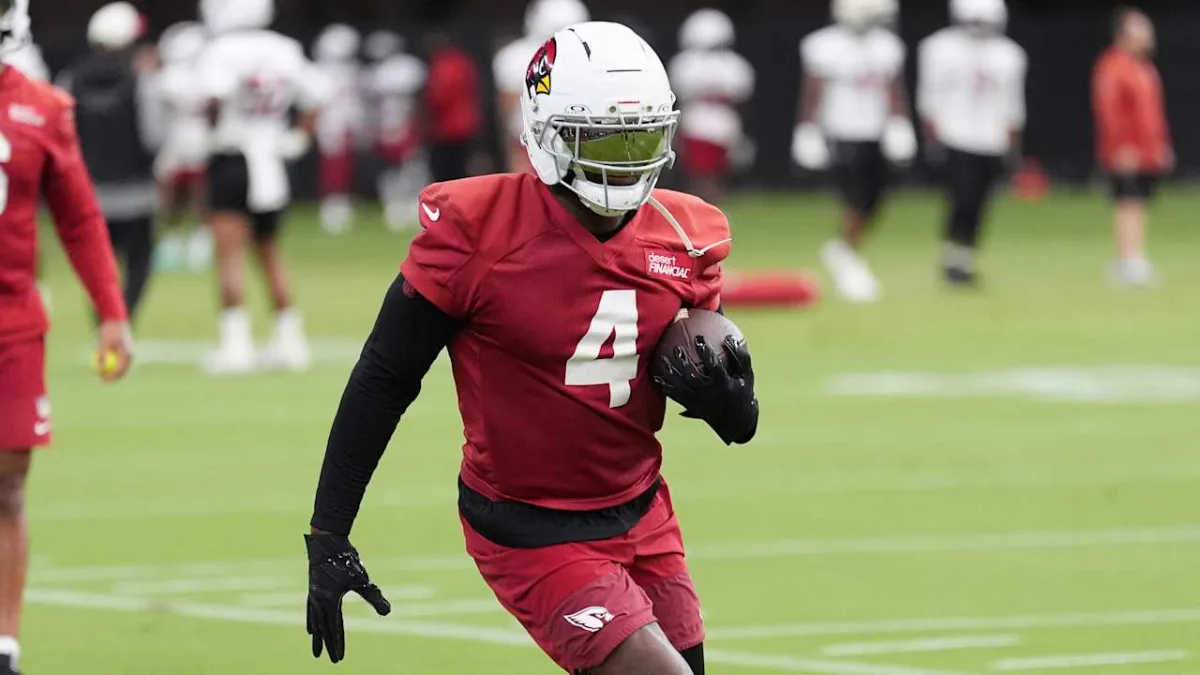
Why Should Fantasy Owners Avoid Overdrafted Players?
Winning your fantasy football draft isn’t just about finding sleepers—it’s also about avoiding players whose average draft position (ADP) has climbed beyond their realistic value. Every year, offseason hype, coaching changes, and highlight clips push certain players into draft ranges where they have little room to outperform expectations.
The best fantasy owners consistently let others overpay while collecting better values later in the draft. Here are the biggest players going too early in 2026 fantasy football drafts.
Why Avoiding Overdrafted Players Wins Championships
Finding league-winning values is only half the battle. Equally important is avoiding players whose draft cost assumes everything goes perfectly.
When a player is selected at or near his ceiling, even a good season can disappoint relative to where he was drafted. That’s why understanding player value—not just talent—is one of the biggest edges fantasy owners can gain.
Below are some of the biggest fades entering the 2026 fantasy football season.
Currently Overdrafted Players
Justin Herbert (QB – Chargers)
Herbert remains one of the NFL’s most gifted quarterbacks, but his fantasy ceiling is being priced as if the Chargers are suddenly becoming one of the league’s pass-heaviest offenses.
Why He’s Going Too Early
- The Chargers still want to build their offense around the running game.
- Mike McDaniel’s arrival as offensive coordinator has created significant ADP hype.
- Even with improved efficiency, overall passing volume could remain limited.
- Herbert offers little rushing production compared to other elite fantasy quarterbacks.
- You’re drafting him close to quarterbacks with higher overall ceilings.
Fantasy Recommendation: Let someone else pay for the coaching hype and target Herbert only if he falls below his current ADP.
Caleb Williams (QB – Bears)
The Bears have assembled one of the league’s most exciting offenses, but fantasy owners may be expecting a bigger leap than is guaranteed.
Why He’s Going Too Early
- His completion percentage still needs to improve.
- Ben Johnson has consistently preferred balanced, run-oriented offenses.
- Passing volume may not reach elite levels.
- The rushing upside helps, but consistency remains a concern.
- He’s being drafted closer to proven fantasy stars than established production suggests.
Fantasy Recommendation: Williams has exciting upside, but he’s priced closer to his ceiling than his median outcome.
Travis Etienne (RB – Saints)
A fresh start has boosted Etienne’s fantasy stock, but his situation isn’t nearly as clean as his ADP suggests.
Why He’s Going Too Early
- Alvin Kamara is still expected to command touches.
- The Saints added more receiving weapons and project to throw frequently.
- Etienne may not dominate goal-line opportunities.
- His receiving workload could fluctuate week to week.
- Volume concerns make his current draft price difficult to justify.
Fantasy Recommendation: Target Etienne only if he slips into a better value range rather than paying his current premium.
Jeremiyah Love (RB – Cardinals)
Every season, rookie running backs become some of the fastest risers in fantasy drafts. Love appears to be following that same pattern.
Why He’s Going Too Early
- Rookie running backs are often drafted near their absolute ceiling.
- Arizona’s offense could struggle to create scoring opportunities.
- Multiple backs remain on the roster competing for touches.
- Pass protection and receiving responsibilities could limit early snaps.
- Expectations may exceed realistic Year 1 production.
Fantasy Recommendation: Love has long-term dynasty appeal, but his redraft ADP is becoming too expensive.
George Pickens (WR – Cowboys)
There’s no questioning Pickens’ talent, but fantasy owners are paying a premium for a player who still has hurdles to clear.
Why He’s Going Too Early
- He’s the Cowboys’ No. 2 wide receiver.
- Target competition limits his weekly ceiling.
- His emotional, volatile style has occasionally affected consistency.
- Weekly production could be difficult to predict.
- His ADP assumes maximum efficiency on fewer opportunities.
Fantasy Recommendation: Pickens is an exciting player, but there are safer receivers available in the same draft range.
Chris Olave (WR – Saints)
Olave finally delivered the breakout season fantasy owners were waiting for, but repeating it won’t be easy.
Why He’s Going Too Early
- His touchdown total is likely due for regression.
- Durability continues to be a concern.
- The Saints added more capable pass catchers.
- Overall target share could decline.
- His current ADP leaves little room for regression.
Fantasy Recommendation: Expect solid production, but don’t draft Olave assuming another career-best season.
Harold Fannin Jr. (TE – Browns)
Fannin remains an intriguing young tight end, but his environment limits his fantasy ceiling.
Why He’s Going Too Early
- Cleveland still projects as one of the league’s weaker offenses.
- The Browns added more pass-catching competition.
- Touchdown opportunities may be limited.
- Tight ends often develop more gradually than fantasy owners expect.
- His ADP assumes a breakout that may still be a year away.
Fantasy Recommendation: Fannin is a better dynasty investment than a redraft target at his current cost.
Travis Kelce (TE – Chiefs)
Kelce is one of the greatest tight ends ever, but fantasy football rewards future production—not past accomplishments.
Why He’s Going Too Early
- Age has noticeably reduced his explosiveness.
- He’s no longer creating separation as consistently.
- He’ll likely need a high touchdown total to finish as an elite fantasy tight end.
- Rashee Rice, Xavier Worthy, and Kenneth Walker all project to command valuable red-zone touches.
- His name value continues to inflate his draft price.
Fantasy Recommendation: Draft Kelce only after younger tight ends with similar upside have come off the board.
Final Thoughts: Don’t Pay Ceiling Prices
The biggest draft mistakes often come from paying for upside that’s already built into a player’s ADP. Every player on this list has the talent to contribute in fantasy football, but their current draft cost leaves little room for profit.
Successful fantasy owners consistently focus on value instead of hype. If someone reaches for these players, let them. Your roster will be stronger by targeting players who can outperform their draft position rather than simply meet lofty expectations.
Overdrafted Players: Frequently Asked Questions
It means a player’s average draft position (ADP) has climbed higher than his projected fantasy value, making him difficult to outperform relative to where he’s selected.
Not necessarily. Most of these players become good values if they fall below their current ADP. The concern is paying full price rather than the players themselves.
ADP reflects where fantasy owners are selecting players across thousands of drafts. Comparing ADP to projected production helps identify players who are overpriced or undervalued.
Yes. Rookie running backs frequently generate excitement after the NFL Draft, causing their ADPs to rise quickly before they’ve earned a featured role.
Compare ADP with realistic projections, prioritize players who can outperform their draft cost, and avoid drafting players whose ceiling is already reflected in their price.