
Why These Fantasy Football Sell-High Candidates Are Worth Trading
The early fantasy football season creates plenty of opportunities to buy low and sell high. A few strong performances can dramatically change how the market values a player, but not every breakout box score represents a sustainable change in role.
That makes identifying fantasy football sell-high candidates an important part of building a stronger roster.
The goal isn’t to trade away every player who has a big game. Instead, fantasy owners should look for players whose current production is being supported by circumstances that may not last, such as unusually high touchdown rates, temporary workload spikes, favorable matchups or unsustainable passing volume.
Here are six early fantasy football sell-high candidates worth considering before their market value potentially comes back down.
Rashee Rice (WR – Chiefs)
Rice is one of the more recognizable names on this list, which makes his recent production particularly useful for fantasy owners looking to make a move.
- The trap: A strong Week 3 performance against a favorable Miami matchup has helped restore confidence in his fantasy value.
- The concern: His production has been driven heavily by short-area targets rather than consistent downfield opportunities.
- The bigger issue: The efficiency and explosiveness haven’t consistently matched what fantasy owners want from a high-end fantasy wide receiver.
- Why sell now: His name recognition and recent box score could create a better trade market than his underlying role suggests.
Fantasy recommendation: Use Rice’s recent production to pursue a wide receiver with a more dependable target floor and downfield role.
Omarion Hampton (RB – Chargers)
Hampton entered the season with significant expectations, but his workload has not developed into the three-down role many fantasy owners envisioned.
- The trap: His draft capital and perceived talent still give him substantial market value.
- The concern: His playing time has already become more volatile than expected.
- The bigger issue: Other Chargers running backs are taking meaningful work, particularly in situations that can produce valuable fantasy touches.
- Why sell now: Hampton’s name still carries the expectations of a potential lead back, even though his current role doesn’t consistently provide that level of opportunity.
Fantasy recommendation: Consider moving Hampton for a running back with a more secure three-down role and stronger receiving-game involvement.
David Montgomery (RB – Texans)
Montgomery continues to produce enough to remain useful, but much of his fantasy value is increasingly dependent on finding the end zone.
- The trap: Touchdowns have helped keep his weekly fantasy production respectable.
- The concern: His rushing efficiency hasn’t provided much room for big fantasy weeks without scoring opportunities.
- The bigger issue: Younger backs are taking enough work to limit Montgomery’s overall touch ceiling and explosive-play potential.
- Why sell now: A touchdown-dependent running back can lose significant fantasy value quickly when the scoring opportunities disappear.
Fantasy recommendation: Shop Montgomery while his recent touchdown production is still supporting his trade value and look for a back with a stronger weekly volume floor.
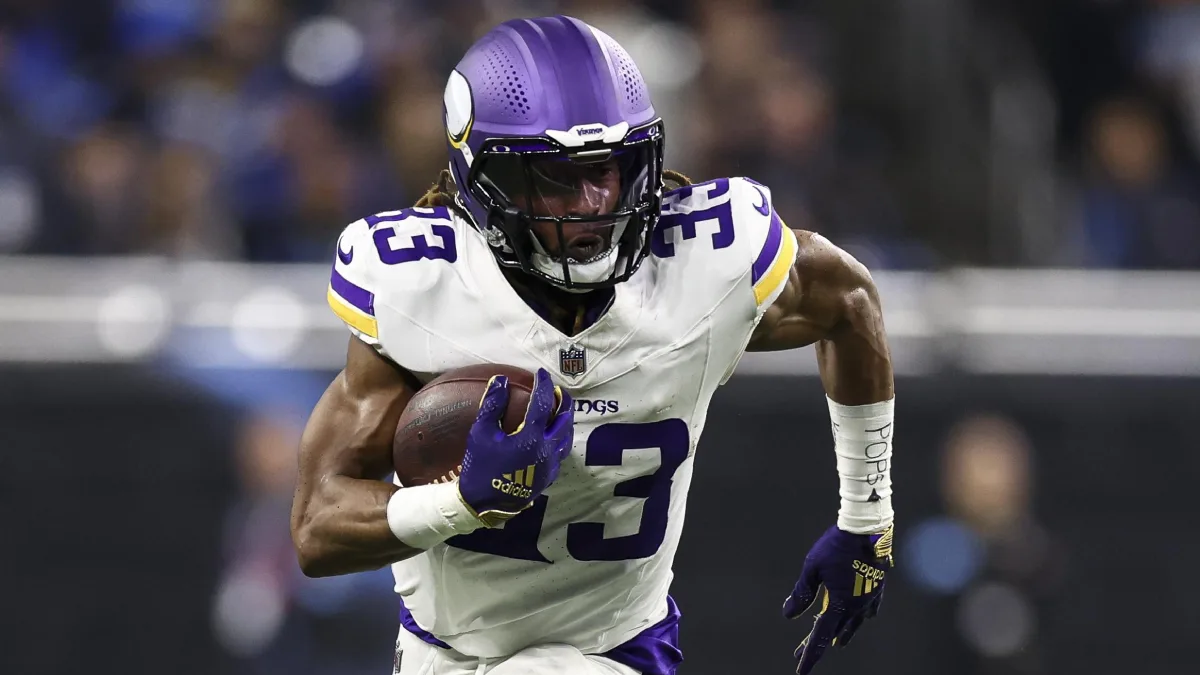
Aaron Jones (RB – Vikings)
Jones remains a useful fantasy player, but his current workload comes with an expiration date.
- The trap: He has benefited from increased opportunity while Jordan Mason has been unavailable.
- The concern: His efficiency is trending in the wrong direction as the season progresses.
- The bigger issue: Minnesota has more backfield depth than Jones’ current workload might suggest.
- Why sell now: Mason’s eventual return could immediately reduce Jones’ touches and make his current workload difficult to maintain.
Fantasy recommendation: Treat Jones as an early fantasy football sell-high candidate and move him before Minnesota’s backfield rotation potentially tightens.
Jordan Love (QB – Packers)
Love has produced like a high-end fantasy quarterback early in the season, creating an opportunity for fantasy owners to capitalize on his current market value.
- The trap: Heavy passing volume and multiple-touchdown performances have pushed Love into QB1 territory.
- The concern: Green Bay’s current pass-heavy approach appears heavily influenced by game circumstances rather than a guaranteed offensive philosophy.
- The bigger issue: Love doesn’t provide the rushing floor that can protect fantasy production when passing volume or touchdown efficiency declines.
- Why sell now: Even modest regression in passing volume or touchdowns could move him to QB2 range.
Fantasy recommendation: In 1QB leagues, consider using Love’s strong start to upgrade another position, while Superflex fantasy owners can explore whether his current value can return a more dynamic quarterback.
Dalton Kincaid (TE – Bills)
Kincaid’s early production has helped reinforce expectations that he can become a consistent fantasy difference-maker, but his weekly role remains less predictable than his reputation suggests.
- The trap: Strong early-season performances have boosted his perceived fantasy value.
- The concern: Buffalo continues to distribute opportunities across a crowded passing attack.
- The bigger issue: Kincaid’s involvement can fluctuate based on personnel and offensive usage, creating a relatively narrow path to strong weekly production.
- Why sell now: His early multi-catch performances can give fantasy owners leverage before a stretch of inconsistent targets becomes more apparent.
Fantasy recommendation: Shop Kincaid while his early-season production still supports a premium trade valuation, particularly if you can acquire a tight end with a more consistent weekly target role.
How to Approach Fantasy Football Sell-High Candidates
Selling high isn’t about predicting that a player will suddenly become bad. It’s about recognizing when the market may be valuing a player based on his best-case outcome rather than his most likely range of outcomes.
For these fantasy football sell-high candidates, fantasy owners should focus on the underlying role:
- Is the player’s workload sustainable?
- Is he dependent on touchdowns?
- Is his playing time secure?
- Is his production coming from a favorable matchup?
- Is another player threatening his role?
- Does he have a reliable path to targets or touches?
- Can you turn his current value into a more stable asset?
The best sell-high trades often involve moving a player before the regression becomes obvious to everyone else.
Final Thoughts on Early Fantasy Football Sell-High Candidates
Early-season fantasy football is full of misleading signals. A big box score can dramatically increase a player’s trade value even when his role hasn’t changed nearly as much as his fantasy production suggests.
That’s why fantasy football sell-high candidates deserve attention early in the season.
Rice, Hampton, Montgomery, Jones, Love and Kincaid all have different reasons for appearing on this list, but the underlying strategy is the same: identify production that may be difficult to sustain, then use the player’s current market value to improve your roster.
Fantasy owners don’t need to trade every player listed here. Instead, use these fantasy football sell-high candidates as names to shop, compare offers and determine whether the market is willing to pay more for the player than his current role justifies.